Showing posts sorted by relevance for query supplements. Sort by date Show all posts

Friday, December 11, 2009

Treatments for Parkinson's Disease

Parkinson's disease is treated in several ways. And treatment is what is currently available; there are no sure-fire cures. Sadly, treatments often lose their effectiveness to combat both the symptoms and the progression of the disease as the years pass.

To confound the problem of treatment is the fact that Parkinson's disease is a collection of syndromes with varied symptoms and progression rates.  Treatment needs to be adjusted to the individual.

Knowledgeable physicians and proactive PD patients learn to be aware of when adjustments in dosage, timing, the addition of another medication to work with the current prescribed med can be effective in prolonging "on" times and reducing "off" times. And some are aware that nutritional supplements are as much a part of a therapeutic regimen as the prescription pad.  Other physical therapies are acknowledged by advanced medical plans so that all you need is a prescription for a sessions which the patient can often continue.

So what are the options?  Let's begin with a summary of prescribed medications by category.  We'd love to post the handy-dandy medication chart we made listing product names, generic names, symptoms for use, contraindications, side effects and some general information about the way the medication works but, doggone it, we've been unable to transfer the table successfully to the blog-site.  We're working on it.  Today we're working from the printed version.  

Prescription Medication:

DOPAMINERGICS are the most common  - these have been the "gold standard" for many years but are not without problems and may not be the best choice for the newly diagnosed.

The standard treatment has been Sinemet (levodopa-carbidopa) This is still the first line treatment for the majority of patients but is losing some ground to Azilect

Levodopa is absorbed into the blood stream in the small intestine and converted into dopamine after in crosses the blood brain barrier. (note: dopamine cannot cross the blood brain barrier)
Problem:  Levodopa has a short half-life and a major side effect is nausea which can last up to a year. A number of other problems can occur including hallucinations common to other PD meds.

The combination of levodopa-carbidopa improves the functioning of the levodopa, prolongs the "wearing off" meaning fewer side effects such as the dyskinesia-dystonia. It can also allow for a lower levodopa dosage.

Other dopaminergics include Madopar which is levodopa-benserazide hcl.
Carbidopa is also a dopaminergic - it inhibits the peripheral metabolism of levodopa prior to crossing the BBB.
For people who have trouble swallowing there is Parcopa (levodopa-carbidopa) which is orally dissolvable.

The most common immediate unpleasant side effect of dopaminergics is nausea which can last for up to a year but may be relieved by increasing the carbidopa. Timing is  important and taking with a low-protein meal may reduce nausea.  It is suggested that a regular protein meal follow Sinemet by at least one hour.

DOPAMINE AGONISTS - bind to different dopamine receptors - they are sometimes taken with antagonists because they have a short half life. The binding activates the dopamine receptor pathways.
I'm not going to list all but the most common include bromocriptine, Requip XL (ropinirole), Mirapex, Trivastal, and the Neupro Transdermal patch (rotigotine) returned to the European market last June and is anticipated to return to the US market in July 2012 - although it is not entirely unavailable to US prescription holders.

DOPAMINE ANTAGONISTS are primarily used as anti-psychotics. They bind but they don't stimulate dopamine receptors - they copy the effect of DA.

COMT INHIBITORS - inhibit the catechol-menthyltransferase enzyme to inhibit the break-down of dopamine after its release in the brain. They begin to work immediately after the first dose. They are often combined with levodopa-carbidopa later in treatment. Common names include Comtan (entacapone) Tasmar (tolcapone and Stalevo (which is a combination of levodopa-carbidopa-entacapone)

MAOI-Bs are another category - Monoamine oxidase-B inhibitors or MAO-B inhibitors slow the breakdown of dopamine by inhibiting MAO-B enzyme. By this action, the dosage of levodopa-carbidopa may also be reduced.
Common MAOI-Bs include Selegiline or Eldepryl, Zelpar. These still carry the tyramine-cheese effect warning which is actually more common to MAO-As. There is also EMSAM which is a transdermal patch of Selegiline which is also approved by the FDA for treatment of Major Depressive Disorder. The 6 mg EMSAM patch does not carry a tyramine warning..

Another MAO-B which differs chemically from Selegiline is Azilect. Many people are turning to Azilect as a first line medication - before any other anti-parkinson's meds because it has shown to be very effective in slowing the progression of this disease. Currently there are trials to determine its effectiveness in being later combined with levodopa-carbidopa to reduce the "Off" times and to prolong the effective usage of levodopa/carbidopa. On December 14, 2009 FDA approved the removal of the tyramine warning from the Azilect label.

OTHER MEDS include off-label meds which have been effective for some people.
They include: Amantadine, an anti-viral which increases the release of dopamine.
DynaCirc CR - a calcium channel blocker or calcium agonist - which tries to restore the cells to a more youthful saline condition.
Note: it is thought that dopamine is forced into the cytoplasm prematurely and there it combines with misfolded alpha synuclein and calcium to create the gummy mess which causes the dopamine to die.
The Exelon patch - a reversible chlorinesterase inhibitor used for moderate dementia, cognitive skills loss and executive skills.
Aricept functions in a similar way but is still more common to Alzheimer's patients.

In the next category are the ANTICHLORINERGICS which block acetylcholine to compensate for that loss of homeostasis with the declining dopamine neurons. They are not as commonly used now but are the oldest of the modern PD meds.
A few names are Artane, Cogentin, Norflex, Benadryl.

I'm not going to list the ANTI-DEPRESSANTS and the various categories such as SSRIs but that is another category of PD meds and yes, we have another fussy table that won't transfer properly.  But we will post it one day because it is helpful.

Okay, what's next? Many people would love to be able to use NUTRITIONAL SUPPLEMENTS or alternatives to conventional medication and there are a number of  important supplements,  but make no mistake, they too have side effects and can have an impact upon brain/body homeostasis - often the reason for use - unless contraindicated or mis-used.

Most of these nutritional supplements can be found in foods but to get the right amounts to fight free radicals we supplement.  To get the optimal amounts of some nutritional supplements, we take capsules and tablets, powders and liquids.  Often we could not possibly eat enough of a particular food and/or those food may also include other elements which in larger amounts might not be so beneficial. Remember also that for PwPs smaller capsules seem to work best unless you can find a chewable or better yet a sublingual that doesn't result in a burning sensation.

In this category are Antioxidants such as CoQ10. Another very important antioxidant for PD is glutathione in either sublingual, liquid or the expensive IV treatment. We'll be writing more on glutathione and N-Acetyl L-Cysteine. Vitamins C and E are antioxidants which work synergistically, even more so with the addition of Alpha Lipoic Acid.  Vitamin A is well stored in the body but an occasional boost might not hurt either as beta carotene or as Vitamin A.

PwPs have deficiencies of certain B vitamins. A low dose of B complex (25-50 mgs max) might be in order. Otherwise B2, B5, B6 and B12 can be adjusted separately.

D3 will help to boost the immune system and for PD patients who don't get out into the sunlight much - there is no other alternative to producing Vitamin D in the body.  Other supplements to consider are: Acetyl L-Carnitine which is sometimes found in combination with Alpha Lipoic Acid.

Creatine is not just for weightlifters and body builders, PwPs are taking it also.  Not just any creatine, however but micronized creatine monohydrate which is available as a pharmaceutical grade product. Creatine is also a powerful antioxidant for scavenging ROS.

You don't hear much discussion about mushroom extracts for PD immune system enhancers but  Maitake, Reishi, Shitake and Astragalus can sometimes be found in a combination capsule (to keep the cost down).

For folks with digestive issues, consider ginger or Lactobaculis Acidophilus for a healthier GI tract balance.  This is very important when diarrhea is an issue or after a course of antibiotics which also does a number on the friendly flora in the gut.

Omega 3 oil is another nutritional supplement.  Another interesting source of essential fatty acids (EFAs) for PD is Coconut Oil, a medium chain triglyceride.  It has an unique combination of fatty acids and does come in capsule form if you don't find one with a decent taste for food preparation.

If you're not drinking green tea, there's a capsule for that and might actually be better for providing what you need without what you do't need. And if you don't cook with a good turmeric from India, it also comes in pills as well.  The primary ingredient of turmeric is a powerful anti-inflammatory in the form of curcuminoids.  Recent research (2012) indicates that the curcuminoids in turmeric are effective in preventing the clumping of alpha synuclein proteinsMoreover, it may do this by speeding up the folding and reconfiguration of alpha synuclein. 

We don't have any experience with mucuna pruriens. You can obtain mucuna pruriens as velvet or fava beans.  It is also available in as seeds, powder, capsule or extract.  The problem is finding the "dose" that works for you since much of it will be lost in the digestive process.  Standardized doses may work more effectively and be safer.  You can find it online as Dopabean from at least one company.  Be wary of claims about the L-dopa content because many companies products are not standardized, making it very difficult to determine how much you need and to risk getting too much or too little.
9/2011 Addendum: Steve has some experience with mucuna pruriens now and we will be writing about it when he has used it for a longer period of time and we know more about the assistive benefits of EGCg found in green tea..

HEALTHY DIET for PD:includes items listed above as well as below.

You're going to have to make the adjustments to your medication schedule and the type and restrictions of those meds.  For nutritional suggestions, some diets like the Mediterranean diet may be a bit healthier and use some very helpful seasonings.  The focus here is on olive oil which actually enables utilization of  nutrients from fruits and veggetables, fish rather than too much red meat, and red wine (in moderation). 
don't forget the green and black tea or a few black walnuts a day.

MASSAGE THERAPY
Is invaluable on a regular basis. This is more than our opinion it has been clinically demonstrated.  If you have the $$$$ and can afford it, 2 sessions a week would be ideal. One session would be good and less than that will see many reversals of the good done. Medical massage - Swedish Massage involves the entire body with focus on the problem areas and issues and really should be done by the same licensed therapist all of the time. Massage increases endorphin levels, works to break up muscle knots, reduces stiffness and alleviates pain caused by a variety of conditions.  An important element in treating postural instability, massage should be on your therapy wish list.  Unfortunately this valuable therapy is not recognized by most health insurers including Medicare.  Other forms of useful massage include Shiatsu/acupressure, and Neutomuscular Therapy (NMT).  Massage therapy can also be beneficial as behavioral therpay when treating anxiety and depression found in PwPs...and their caregivers.

PHYSICAL THERAPY

Occupational therapy for assistance with tasks of daily living. Getting into bed, standing and sitting, buttoning a shirt, whatever. While this is not permanent on-going therapy, a patient will need refresher courses as the disease progresses. Care-givers should attend these sessions if permitted.

Exercise therapy can include a wide variety of therapies: swim, dance, yoga, tai chi,  nautilus equipment, exercise bikes - especially motorized bikes for legs and arms, vocal exercises.

Forced Exercise: is a more recent concept but very exciting. If it you find access to the right equipment and can put in the required time, it might work for to reduce reliance on higher dosages of medication and to relieve some symptoms.

Voice therapy will include the very important breathing exercises to aid speaking, breathing, swallowing. If you can't get to a therapist, there are home exercises which will help.

OTHER TREATMENTS
As the disease progresses there is also Deep Brain Stimulation if the patient meets the qualifications and the physicians feel they are good candidates.

There are older surgical procedures but are not as commonly used in this century. More treatments and surgeries are in the pipeline. However, it was announced in October, 2010 that these older surgieries are still valid and moreover can be used with DBS with the understanding that there is a higher risk of depression with subthalmic nuclei surgeries.

While we are not convinced that any form of stem cell treatment performed now will have more than limited advantage, who wouldn't want to have that advantage for a few years?  If successful, there appear to be reversals after a few years.  The various forms of cell therapy are still works in progress and are still pipeline treatments.

Although not treatments, tools that can help the PD patient with activities of daily living are part of the therapy to assist unaided or semi-aided functioning.  Special handled flatware, laser canes, shirts with snaps, cups that prevent spillage, walkers with baskets and seats, voice recognition programs and other computer programs to enable "typing", bath seats, higher toilet seats will be of use to many PwPs.

One last observation: a plan is needed that involves the dreaded "what if" stuff.  How and who and when, where and why.  Quite a bit of planning may be necessary for a disease which can render a person almost completely non-functional.  Families need to discuss these matters with the patient in the beginning. Plans must be made to make the home safe for the PwP so that they can remain there as long as possible.
 
And plans must be made to relieve caregivers from time to time. I'd suggest weekly to be realistic to their needs.  Several hours are necessary so that they can catch up with social activities, do shopping, spend some uninterrupted time with reading or email or just get a well deserved rest to make up for their own sleep deprivation. 

Think what a wonderful Holiday Present some free time would be to someone who needs recharged batteries.

Friday, March 13, 2009

Questions About Parkinson's Disease Part V - Depression & PD

Parkinson's Depression and the three molecules of depression: serotonin, norepinephrine and dopamine

Depression is a common problem for many people - we hear those ads on television every day along with the side effect warnings. Parkinson's patients, their families and caregivers alike may go through periods of depression. The remedies and treatments for PDer and the carer may differ because of medication and supplement interactions and the disease itself.

Some research has indicated that the chemical changes in the brain caused by depression might actually be a trigger for PD. We know that Parkinson's shows itself after a significant loss of the neurotransmitters dopamine and norepinephrine; is serotonin deficiency occurring at the same time or earlier? One view is that synaptic depletion of serotonin allows a fall in norepinephrine levels. Which might mean that manipulating serotonin levels would increase norepinephrine levels if the norepinephrine depletion hadn't occurred because of the dopamine depletion. Which is why depression treatment can be different in Parkinson's disease.

Depression is often one of the 1st symptoms of PD - long before any obvious ones. Older patients can also manifest confusion, memory loss and apathy. PD is not the only disease associated with depression; Alzheimer's disease, kidney failure, stroke, AIDS, chronic fatigue, fibromyalgia, cancer and hypothyroidism patients also suffer from depression.

The PD symptoms for depression range from lack of energy, a struggle to arise to begin the new day, sleep disturbances, feeling irritable and anxious, have a sense of the loss of self-worth, feeling of self-guilt and loss of appetite. Because depression often manifests early it may seem to everyone that it is an extension of the appearance of Parkinson's Disease symptoms and the diagnosis. The depression may come and go. In the late stages depression may actually be caused by a chemical imbalance.

It is understandable that people would be depressed by having any disease because there is the shock, the grief and the sometimes not so subtle physical changes. There are differences in PD. A primary difference is that the depression over loss of mobility and appearance of other motor symptoms may actually acerbate the symptoms.

Psychological therapy such as cognitive-behavioral therapy as opposed to psychotherapy can be of benefit to PD patients because it can help restore a more positive self image which can assist in improving caregiver and family relations as well. It can also help the patient focus on problem-solving rather than the loss.

There are also medications which help. Be aware, however, the Cleveland Clinic information suggested that amoxipine (Ascendin) can make PD symptoms worse. And there are others which can cause low blood pressure. Selective serotonin uptake inhibitors (SSRIs) are among the more recent, safer meds. However, recent a study showed that nortriptyline, a tricyclic antidepressant (TCA) which targets both serotonin and norepinephrine receptors was more effective in PD patients than paroxetine (Paxil) an SSRI. Tricyclics are older antidepressants which must be monitored closely for overdose

If you are taking Zelapar or Zydis selegiline, Eldepryl, Cipro (Ciprofloxacin) there are cautions about taking antidepressants, SSRIs and tricyclic antidepressants because of interactions and side effects. Prozac and Zoloft may cause anxiety, tremor and insomnia.

Much to our surprise, we read that electroconvulsive therapy ("shock" therapy) works more rapidly than medication and may actually help improve other PD symptoms in some cases.

Another important treatment is exercise. It will help both the the depression and the PD symptoms.

There are also supplements which can help. Remember that medications are not the only substances which can cause side effects. Food and dietary supplements also have side effects.

Most of us are familiar with St John's Wort. You can also find St John's Wort in combination with 5-HTP and vitamin B-6. L-5-Hydroxytryptophan crosses the blood brain barrier and is said to help relieve anxiety and depression as well as being a natural relaxant which also aids in insomnia. There is some evidence that 5-HTP should not be used with carbidopa. If you are taking Azilect, if you are combining with MAO1 inhibitors, you should make sure to consult your doctor before taking ST John's Wort or 5-HTP. (Currently Teva, manufacturer of Azilect, is working with the FDA to change the description to MAO-B inhibitor which can be more broadly prescribed.)

Because of the impact upon the three molecules, the big 3 monoamines of Parkinson's, it is important to discuss any supplements you are considering with your neurologist. Melatonin is another supplement which is used in low doses to treat depression because it is known to raise serotonin levels and to help adjust the sleep cycle. Supplements should not be taken without a discussion with your physician.
It is important to keep in mind that everything you take into your body, including the foods you eat, will interact with everything else you take. Some combinations are synergistic, they work well together and may amplify the benefits while combining others can cause serious side effects.

One last area to discuss is Seasonal Affective Disorder - SAD.
It isn't just the winter blues because you feel cooped in even when you have to go out and about. SAD is more serious than that. It affects patients and caregivers alike. Some people have SAD even in the spring and summer.

We'll talk more about SAD in the next post - better late than never.

Friday, March 6, 2009

Questions about Parkinson's Disease

Introduction to Questions about Parkinson's Disease

Earlier this week we received some questions from a student who was working on a project for school. Since it's easier to create a questionnaire when you already know the answers, we've revised the question list and are presenting it here with the introductory remarks we also provided.

Introduction Please understand that this patient is only in between phase 1 and 2 and hopefully with the help of the medications he is taking and the addition of supplements and physical-type therapy, we will be able to hold the PD where it is now for awhile. You should know that each patient will manifest symptoms in a slightly different way; certain symptoms may never appear in some patients. Some patients progress rapidly from stage to stage.

Advanced stage PD patients might not be able to answer your questions. At that point you might need to talk to the caregiver and even they might not be able to answer precisely for obvious reason that they are not in the mind of the patient. By this time dopamine levels in the brain have fallen so severely that the remaining neurotransmitter cells cannot function well enough to prevent contracture of the limbs and sometimes the torso. This is more common in patients with psychosis. At the advanced stage the dopamine auto-receptors do not seem to be functioning much if at all.

Another thing you should know is that there are usually undiagnosed precursor symptoms - symptoms which appear well before the standard identifiable symptoms of Parkinson's disease. These symptoms are not identified by either the patient or the physician as being disease related. One school of thought on this is that as the dopamine and subsequently the norepinephrine cells die and their neurotransmitting ceases, the limited dopamine resources are allotted to other body functions. Sense of smell, an early symptom, may be seen by the brain as being peripheral and therefore reduced or shut down.

Depression is another precursor symptom. Being depressed by having the disease is logical but having the depression or severe stress can be either a trigger or an early symptom. PD depression is not treated successfully in the standard ways because the source is different. There are no standardized test for dPD but there are existing depression tests which can be used.

Since Parkinson's, long thought to be an idiopathic disease, may actually be a genetic disease which can skip many generations until it responds to a trigger or a built-in trigger on a mutated gene - there are several associated with PD - it is commonly an older person's disease. The numbers of patients go up at each year over 65. There are also young-onset or early onset patients who manifest differently in many cases. Their response to meds are different also. And sadly there are also juvenile PD patients whose symptoms can manifest between 2 and 20 years of age. The last two groups have not received nearly enough attention in the past.

There are different courses of treatment for patients as some prefer to postpone levadopa medications in favor of levadopa agonists or diet, exercise and supplements. Many of the medications have side effects either short term or within a few years that impact a decision for that line of treatment. There is also some surgery which is about 50% effective in reducing the need for medication. Other courses of treatment include diet, natural supplements and types of physical therapy including exercise therapy, dance therapy, yoga, breathing, voice exercises, swim therapy and massage therapy.

Without these extras Steve's body would have stiffened far more than it has already. His massage therapist commented to him that she had never felt shoulders as stiff as his. We are working on that outside the therapy because without regular attention (once a week is not enough but certainly all that we can afford.) I perform a different procedure than the therapist. I was shocked the other day (the day before massage therapy) when his shoulders felt more like a car bumper than what shoulders should feel like. So I improvised and it helped. I did what was intuitive although contrary to what is recommended but it seemed to make a positive difference. I pulled back on his shoulders and then pushed forward against his shoulder blades. Next I moved his upper arms. I would like to say "gently" but it was not gentle. I raised both arms to touch his ears and then alternated with pulling the shoulders forward and back. I also deeply massaged the muscles on either side of his spine followed by moving his upper arms again.

Within the next week we will be making another video of him walking outside (we need space for this) so that we can compare it to videos we made 3 1/2 years ago. Because he also has arthritis in his knees, especially on his weak/stiff side, that has had a profound impact upon his resistance to that pain. The same options for arthritis treatment on knees available to the average person with arthritis are not viable options for a Parkinson's patient.

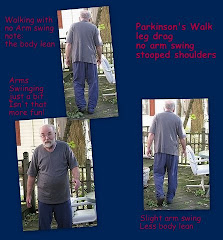
We have designed other exercises to assist his balance and leg stiffness which affect his ability to walk normally. PD patients often shuffle rather than being able to bend all joints in a normal walk. He has to practice turning by lifting his legs rather than pivoting which aggravates pain in his arthritic knees. We also work on his breathing and his voice. We work on shoulders, arms and arm swing. Again, if you read some of the blog articles or look at the photos, you can see the symptomatic posture with lack of arm swing, difficulty sitting and walking.

He also takes several supplements about which we have written before. He takes CoQ10, Turmeric, Nettle Root, sublingual Glutathione, vitamin B complex, a multivitamin with almost no iron or other heavy metals, slippery elm and fenugreek and a few others. Some of them are obviously helping. For one month we added a zinc ascorbate with vitamin C to help restore a bit of his sense of smell...which it has. He won't take that again for another month or two because taking for longer is contraindicated.

TOMORROW: The Questionnaire
Followed by: PD Tests - The progression scales 

Questions About Parkinson's Disease - Part II

Questions about Parkinson's Disease Symptoms & Diagnosis Part II
Welcome to the second of the Questions about Parkinson's Disease evoloved from a questionnaire submitted by a young student a few days ago.

The Questionnaire
How old were you when you received your PD diagnosis? I have been diagnosed with PD for 6 years. I am now 67. I was aware of symptoms for at least 8 years and my wife was aware of some of my symptoms for several years before that. She did not have a name to go with the symptoms however because she as well as my doctors did not know the early symptoms. By the time a patient is diagnosed the dopamine and norepinephrine levels have already dropped by 60 to 80%. (Serontonin levels and dopamine levels are supposed to be in balance.)

What are the first signs and symptoms of Parkinson's disease? The symptoms can vary from person to person. Stiffness, tremors, balance, walking gait (slow, shuffle) These are also symptoms used in the clinical diagnosis. Loss of sense of smell is an early sign which is not yet widely recognized by internists. It is often one of the earliest signs.

What are the characteristic symptoms of Parkinson's disease? The University of Maryland uses the acronym TRAP: Tremor, Rigidity, Akinesia (lack of movement) Postural instability

Are there other symptoms? Yes, there are secondary symptoms which like the primary symptoms may not occur in every patient.
Stooped posture - a tendency to lean forward
Dystonia - Prolonged muscle contraction causing repetitive movements, twisting
Fatigue
Impaired fine motor dexterity and motor coordination
Impaired large motor coordination
Decreased movement of arms such as decreased arm swing-not to be confused with occurrence of tremors
Akathisia - inablilty to "sit still" often caused by antipsychotics
Speech problems such as softness of voice or slurred speech caused by lack of muscle control Lack of facial expression, or "masking"
Micrographia, small, cramped handwriting
Difficulty swallowing, choking
Sexual dysfunction
Drooling
Constipation
Urinary issues

What are the diagnostic tests used to diagnosis Parkinson's disease? There are really not many diagnostic tests for PD. Rather than testing by an internist or GP, usually the diagnosis falls to a neurologist who specializes in neuro-motor problems.

Conversation and physical observation become the major part of the diagnosis because you can't do a biopsy for PD. CAT or PET scans or an MRIs can rule out other conditions but have little definitive value for PD at the diagnostic stage at this time. Nor is an EEG effective because in all of these tests the brain of a PD patient appears normal. What remains is a clinical diagnosis (office diagnosis) based upon a list of symptoms.

The PD diagnostic symptom check list begins with:
Resting tremor
Bradykinesia (slowness of movement)
Rigidity (increased muscle tone-stiffness-inability of the muscle to flex and relax as it is always flexed)
Postural instability (impaired balance and coordination which results difficulty making normal turns, freezing, compensatory posture)

Diagnoses can be missed or incorrect. But symptom progression becomes the validating measure...or not

Some doctors use the questions on a PDRS which is really a disease tracking method. In my case the internist listened to my list of symptoms and then asked a series of questions: look at my finger etc, cognitive questions, standard neurological questions. He then said that he thought that I either had Essential Tremor or Parkinson's Disease and referred my to a neurologist. I do not know if he checked my chart to see if I was taking any meds which block the production of dopamine in the brain but he may have done that.

You can find that list of dopamine blocking meds here: http://www.wemove.org/par/par_dia.html

When I was diagnosed the neurologist gave me some standard neurological tests and an electro-conductivity test of muscles (Electromyography) which involves needles in the arms, legs, and various places on the body. That test is not to determine Parkinson's but rather ALS - it will also rule out ALS in the case of Parkinson's disease. In my case it confirmed that I had carpal tunnel syndrome. Based upon the clinical tests and his judgement, his clinical diagnosis was PD.

He then prescribed Amantadine because I had already told him about taking CoQ10 and that I would not take Sinemet yet. The Amantadine stopped the pinpoint pains which was a relief.

In the future: At this time there is research underway to develop an MRI test for iron in the brain cells. The technology comes from work with the Diamond Synchrotron.
(You can check the synchrotron in Wikipedia http://en.wikipedia.org/wiki/Synchrotron)

How does Parkinson's disease affect your daily life? The disease begins with subtle differences.
Difficulty getting in and out of cars.
Being stiff and unable to bend to do small household repairs.
Certainly not being able to climb a ladder to make larger repairs because my balance and flexibility are affected. (I used to be a contractor and could literally build a house.) So it has changed me from what I could do to not being able to do simple things.
I can still read and think and spend much of my time learning more about Parkinson's research and therapies as well as writing about them.
Getting dressed is more difficult due to stiffness. I have to be careful about what shirts I wear to exercise therapy because I have to be able to put them on and take them off by myself at the therapy center.
Because I have found supplements which help, I no longer have much problem swallowing and choking. My voice is somewhat restored because of taking DynaCirc CR, a calcium channel blocker which crosses the blood brain barrier and may actually have slowed the progression of the Parkinson's disease.

I was very fortunate to have found a doctor who would allow me to take it - of course I had been a cardiac patient before that and he decided to allow it because of the label use although now it is accepted for off-label usage.

What are some complaints that you have with having Parkinson's disease? A disease which can cost your livelihood it not fun. It makes things more difficult to be on a reduced income in a time when plenty of healthy people are competing with you for the same jobs. Although I still have my cognitive skills, it takes me longer.

Because of the stiffness on one side of my body, I have some difficulty typing. Actually we are doing exercises for that and occasionally I am able to return to typing with both hands. I do not like not being able to make repairs around the house, not be able to do yard work. I used to ride my bike for miles. I have not been able to ride my bike for several years because of the stiffness (and the pain in my knees.)

I never liked taking any pills and now I have to take meds (heart and PD) as well as many supplements which support the treatment. I finally realized, when I added the last supplement, that it was time to make a chart of what to take when.

The problem with having a chronic disease for which there is no cure is that you can read about research and therapies but the process takes a long time. There is a lot of trial and error to find correct directions. Research is very expensive and the FDA makes it very very expensive to get approval.

I feel that after Phase I clinical trials a drug should be offered to the public as long as patients agreed not to sue if there were unexpected side effects. (My wife has mixed feelings about that) But only an act of Congress could get that enacted and there has been a long history of not being able to act in the interests of disease minorities and mixing religion with politics - antithetical to the founding principles of this country but nonetheless present now as it has been throughout history.

You get used to people laughing at the way you move or at least I did - I guess some people just don't go out much because of that.

What changes did you manifest when Parkinson's disease became very bad? I have not reached the "very bad" stage and with some luck and by continuing to use the medication, supplements, exercise, massage therapies I am using, I hope that I will progress very slowly to the next stage...if at all. If I can remain in stage 2 long enough, perhaps I can live long enough to see a cure.

If by very bad you mean when did I see a doctor, I will explain the early symptoms and what took me to the doctor's office for a medical diagnosis.

Understand that by the time I went to the doctor, I was pretty sure that I knew what I had and had already begun to take the antioxidant CoQ10 which actually was helping me. My early symptoms were foot drag - which I had had for a few years but attributed to the arthritis triggered by walking on very hard floors at work; loss of sense of smell which had been steadily going for several years, stiffness which made it difficult to get in and out of cars, some depression which I didn't acknowledge much, a tremor which began in my left thumb, and small pinpoint sized powerful pain in my torso and later anywhere on my body - this made me think that there was something neurologically wrong with me and that is why I made the appointment.

These are some of the problem issues of the early stages of advanced Parkinson's disease:

Cognitive decline
Behavioral problems
Communication
Difficulty with urination
Falls
Impaired performance of activities of daily living
Sexual dysfunction
Swallowing
Walking and balance problems
Weight loss

While these problems may occur at any stage, they can become more pronounced in advanced stages. It is a matter of degree.

If you don't mind me asking, what type of health-medical insurance do you have? Originally the health provider was Kaiser Permanente which I had through work. Finding a set of doctors was fairly easy although not all were versed in Parkinson's and my husband had to do most of the information searching on his own. We are now using Aetna Plus Medicare. Unlike the Kaiser HMO, it does not appear to cover as many alternative therapies while Kaiser was limited but some of that is a grey area since I am new to the plan.

Many of the medical expenses associated with the right kind of treatment for Parkinson's are not covered by our insurance since they involve massage therapy, exercise therapy, swim therapy, expensive supplements. Much of our income goes to PD expenses.

Friday, June 19, 2009

Low Dose Naltrexone and Parkinson's Disease III: Dosage-Timing Updates

LDN Updates and Finding a Compounding Pharmacist

We wrote about Low Dose Naltrexone on May 31, 2009 as a possible PD treatment adjunct. On June 8, 2009 we posted an update on the possible side effects.

Naltrexone (Reviva) is an opioid blocker, it blocks all of the opioid receptors in the brain. It was approved by the FDA to treat recovering addicts. Since it is generic, we won't see additional presentation to the FDA for other conditions.

The low dose version triples the body's production of endorphins which supposedly kicks the immune system into full operation. The drug doesn't fight the diseases directly, the body fights the diseases after the immune system is back to normal. The LDN (about 4.5 mg daily after titrating up from 1.5 mg) effectiveness lies in its intermittent blockage of the opioid receptors allowing for endorphin levels to increase for 1-3 days.

A special Thank You to the reader, Solutions for Stressed Caregivers, who took the time to post a comment which provided a link to the recent and first Low Dose Naltrexone Conference held in April, 2009 in Glasgow, Scotland.

SSC also noted that the dosing time recommendations had changed. According to what we read daytime is now a favored time. However, at the conference it was observed that in chronic fatigue syndrome, a morning dose is recommended due to sleep issues. MS patients who have found significant help through LDN, the times should vary according to need and sleep requirements.

I thought that we had mentioned that liquid LDN was available but what we didn't realize was that it could actually be compounded with care at home. Although that is not something we would try or recommend, we did find a link to advice for doing just that. Mr Delaney has also provided practical suggestions for finding a compounding pharmacist. If you reside in the United States you will want to make sure that the pharmacy or pharmacist belongs to the Professional Compounding Centers of America. In the US you can also contact the PCCA. For those in the UK, the contact information is in the article. Many thanks to Mr Delaney.

Remember, before adding supplements, adding a medication, changing dosage and times, or stopping a medication, always consult your physician.  And please let your doctor know about any seemingly benign supplements you are taking because there can be interactions to certain medications.

Although the Parkinson's LDN database at LDN World Database is small, it will provide some helpful information.  If you are using LDN for PD or know someone who is, it would be a great idea to make your addition to the database.

Addemdum 4/04/11
Just a cautionary:  Some medications may do not work well with LDN for some people although they might work just fine for you - we'll be adding to this list:
Clonazapam (klonopin), a benzodiazepine
Prednisone
We'll be expanding this list

Addendum 6/27/11
I just read a very inportant tip for PwPs taking LDN. We be pass it along because of the Parkinson's risk of falls and breaks and the very real possibility that you could be given a narcotic painkiller in such an emergency.
If you are taking Low Dose Naltrexone, it would be a good idea wear a medical alert bracelet/pendant/dogtag stating just that: Low Dose Naltrexone (4.5mg) rather than LDN which people might not recognize.
It is important that the information be directly available before treatment is initiated using a painkiller which will cause you incredible pain if you are on LDN which blocks certain receptors.
And of course carry a wallet card which lists allergies and other pertinent information.

Addendum 9/27/11
Dr Weintraub reports that clinical trial NCT01052831 is still enrolling for Parkinson's disease patients in the Philadelphia, PA area.  This trial is being funded by the MIchael J Fox Foundation.

Monday, July 13, 2009

Along the Parkinson's Disease G-I Tract

Who put the pee in PD?

Many Parkinson's patients have problems along the gastro-intestinal tract because of the affects of losing some control of their autonomic nervous systems (aka: visceral nervous system) part of the central nervous system. I'm no exception. I have swallowing issues, some digestion and constipation problems, sleeping disruption and sexual function disorders to greater or lessor extents.

In the past winter when I had difficult sleeping problems, I eventually overcame them without using more PD medications or supplements. But the urinary problems that made the sleep disorder more problematic continued.

The last couple weeks I have started suffering from increased urinary frequency, which has caused me to have "accidents" with no warning at all. There are prescription drugs to treat this, but the side effects for PWPs can be daunting. If I were still employed I would have to use those meds but since I'm not, I have the luxury of time to try alternative treatments.

Although my usage is not constant, I've been taking pumpkin seed and saw palmetto as often as possible to cut down on the number of times I wake up during the night because I have to urinate. I have felt the need to look for another herbal treatment to use in addition and have been trying stinging nettle with good results in combating urinary frequency.

In the past with my doctor's blessing I've used Viagra to treat my parkinson's related ED problem. The results were very exciting. The results have produced no side affects. However my wife who is my carer and lover feels that Viagra could be harmful for me and asked me to stop using it, which I have done.

Meanwhile I started on the nettle and after a couple of nights she asked me if I was using Viagra again to which I told her no. She replied that "it sure felt like I was!" I am trying to determine if this is a direct result of the nettle or possibly the pumpkin seed.

In favor of stinging nettle is its medical history for hundreds of years. In medieval times it was used as a diuretic and as an arthritic joint pain treatment. It is still used to alone or with NSAIDs to reduce inflammation and sore muscles. My wife used to use it regularly to prepare for allergy seasons.

The Roman soldiers in more northerly campaigns used it to create body heat through its skin irritation properties. It is still used to treat enlarged prostate. Coupled with saw palmetto and pumpkin seed it is used for a variety of urinary issues in men: reduced flow, incomplete bladder emptying, dripping after urination and feeling a constant need to urinate. It may slow the growth of prostate cells. Chemical components affect both testosterone and estrogen.

Just as with any medication, when taking supplements one has to check for food, drug, condition interactions. Stinging nettle is no different. For some people it is contraindicated. Because I am taking both Atenolol, a beta blocker for my heart condition and Dynacirc CR for its benefit as a calcium channel blocker for PD, I have to be aware that nettle can increase the effects of both medications, meaning that my blood pressure can drop...

which may not be so bad except that I may need to be careful about the nettle dosage because I also have Parkinson's and stinging nettles contain the following phytochemicals most of which are helpful but we're not so sure about some: histamine, acetylcholine, serotonin, flavonol glycosides, sitosterol, lectin, coumarins, hydroxysitosterol, scopoletin, tannins and lignans.

So I won't overdo it but it's time for a positive change.

additional reading:Stinging Nettle

Monday, October 19, 2009

Parkinson's Disease News Updates in Brief

Point and Click for PD updates  

From Parkinson's Action Network:

VA Secretary Supports Veterans with Parkinson's Disease Exposed to Agent Orange
Veterans Administration Establishes Presumption of Service Connection for Vietnam Veterans with PDM

Eric Shinseki, Secretary of Veterans Affairs, established that Parkinson’s disease will receive a presumption of service connection for disabled Vietnam veterans living with Parkinson’s disease.  Based on a July 2009 report by the National Academy of Science’s Institute of Medicine (IOM), this decision simplifies and accelerates the benefits application process for Vietnam veterans with Parkinson’s disease who were exposed to Agent Orange.  Now, Vietnam veterans with Parkinson’s disease applying for disability benefits do not have to prove an association between their illness and military service.
“The entire Parkinson’s disease community supports this decision by Secretary Shinseki,” said Amy Comstock Rick, PAN Chief Executive Officer.  “This will now allow our Vietnam veterans to receive the support and care they so rightly deserve rather than becoming experts on Agent Orange exposure simply to apply for benefits.”
...."available evidence supports a possible link between exposure to Agent Orange and Parkinson’s disease.  Along with Parkinson’s disease, the Secretary also established a service connection for B cell leukemias (such as hairy cell leukemia) and ischemic heart disease.  There are 12 other presumed illnesses recognized by the VA"
....."The U.S. Military Veterans with Parkinson’s (USMVP), a group of over 200 Vietnam veterans living with Parkinson’s disease, has championed this issue for years and has strongly advocated for VA benefits.  It was through their hard work and determination that Vietnam veterans exposed to Agent Orange will now receive the benefits due to them for their service."

Nutritional Supplements

Green Tea
Drinking five cups of green tea per day may reduce the incidence of psychological distress by 20 per cent, says a new study from Japan.
Green tea extracts may slow smokers’ lung damage

Omega 3

CoQ10
Supplements of coenzyme Q10 (CoQ10) may protect or retard the development of fatty liver related to obesity, suggest findings from an animal study
CoQ10 by any other name:
Andelir®, CoenzymeQ, Co-enzyme Q10, Coenzyme Q (50), CoQ, CoQ10, CoQ(50), Co-Q10, CoQ-10,
2,3 dimethoxy-5 methyl-6-decaprenyl benzoquinone, Heartcin®, idebenone (synthetic analogue),
Kaneka Q10™, mitoquinone, Neuquinone®, Qunol, Q-Sorb, Q10, Q-Gel®, Solu™ Q10, Taidecanone®,
ubidecarenone, ubiquinol, ubiquinone, ubiquinone-10, ubiquinone-Q10, Udekinon®, vitamin q10, vitamin Q10

Clinical Trial: Effects of Coenzyme Q10 (CoQ) in Parkinson Disease

Other News
Cogane
Cogane headed for Phase II trials
June 2010:  Phytopharm announced that it has received FDA protocol approval to procede with Cogane Phase II clinical trials. Enrollment will begin in late 2010.
You can read the Phytopharm press release here
Check back for the links to the enrollment links.

Forced Exercise
See PD Trials for contact information about the Dr Albert's Forced Exercise trial, The Therapeutic Effect of Exercise on Parkinson's disease, Study ID: 09-439

Friday, January 9, 2009

For Better Or Worse with Parkinson's Disease

So we all know that Steve has PD

A couple of weeks ago I asked Steve if I could write an entry for this blog because I thought it might be helpful to share his progress from the other side of the room. I'm glad I waited because there has been a change very recently which has been a big boost to my morale.

One of the problems with being the spouse of a PD patient is that your role changes subtly at first to worried carer, then to watcher of symptoms, you develop your research skills in areas you never studied in school. You become an exercise nag, the assumer of household tasks, the valet, then the voice on the phone, you become under-protective and overprotective. Since Steve is only in early stage 2, I don't know as much about the next roles from first hand experience.

These are not play roles, they are quite real. All the while you know that it is the essence of that person which you love and swore to stay by in sickness and in health. And here it is...and sometimes you are not quite sure who you are because your needs have to change as that disease progresses.

Sitting at the computer, everything about him looks normal, as normal as say 15 years ago. The glasses are a bit different as Steve began wearing prism glasses for desk-work only almost two years ago.

So where are the changes?
I take out the garbage now. It was always his chore...which he has hated from the time we were married. When I returned from Florida I realized that he was getting garbage out of the house but not out to the curb. So it became my chore.
His reasons are different now. The loss of strength now prevents him from hauling the bags to the curb. He could still do it but tires quickly from the pain in his knee.
Actually this pain is the greatest physical problem that we have. He was the brains and the muscle of this family. And the muscle tone went rapidly when the arthritis pain caused by the knee deterioration became too great. Because of the Parkinson's disease, he is not a good candidate for any surgical procedures on his knee. PD stiffness coupled with the arthritis caused a very rapid decline in tone and strength. Loss of muscle tone aggravated the bow now seen in his legs. Pain and medication caused the decline in stamina.

The tremor is present in his left hand but it is a minor thing which he resents and I don't give much attention. That slight tremor has caused so much trouble for early PD patients who begin to take stronger meds to hide symptoms. Their fear of that identifying symptom of PD being recognized creates the greater fear of being fired ...which in turn leads to distraction at work...because after all, your employer only signed on for better...which makes it worse.
The hearing loss has been a gradual problem for years. He has a hearing aid but doesn't wear it often. I nag him to take his eyes off the road so that he can hear me while we're talking. He forgets that he has a "good" ear on the far side. It's okay, I'm driving.

So here's some good stuff. Steve is, as everyone knows, going to water therapy which he really began when I was in Florida and he would exercise in the pool - very similar exercises, I might add except for the walking. That pool had a deep end, the one at the therapy center does not. He's doing Nautilus and other exercises from a program designed just for him. And there is some improvement.

He understands about increasing his stride but since this former cross country runner always had a short walking stride, it is that much more difficult to increase it.

The arm swing is another problem which is being addressed at the therapy center and in massage therapy. I haven't seen much improvement but it certainly isn't worse...which with PD, may be an improvement. What makes me feel good is when he says he can feel a difference. His triumph is our triumph.
Sense of smell is almost gone - never was that good. Sense of taste...well, we use different varieties of pepper to hit the tongue on the way in.

I can't talk about sex here because our daughter reads this blog and she doesn't like to think that her parents ever...let alone discuss it. We all know that she was delivered to the hospital in a lovely basket by the stork. She knows about storks and chimneys because she used to live in the Netherlands.

Some of my household identity came from the repairs/remodeling which Steve made around the houses we've lived in. The first house had a new enlarged kitchen, a brand new powder room and a remodeled bathroom all due to his excellent handiwork. This house has not fared as well with remodeling but has had plenty of repair work. He stopped working much on the house when he went into contracting...need I say much more?
Yes, the remodeling is waiting for...? I'm a terrible plumber but in the next few weeks, he's going to teach me how to replace the kitchen drain. We replaced some underlayment (I pried and he supervised) in the kitchen in October and between the two of us, we repaired the furnace in November. So while I would prefer that he do this work while I do almost anything else, it has brought us into closer cooperation.

I bite my tongue less often now when one of us makes suggestions about supplements to try. He's repeatedly reminds me that he can't go back to the 1990s to take CoQ10; he's taking it now. Back then he thought it was all witch doctor stuff. Now he not only listens, he reads, he discusses and he tries the ones that seem to have the most promise.
The latest supplements are a revisit to turmeric (curcumin) and a test of glutathione (with NAC) and milk thistle. And they seem to be helping. I see it in cognition skills returning and an attitude change. He's getting Jeopardy answers that even contestants are missing. That makes my heart soar. I think we need to learn to Tango soon.

I know he'll never have the brute strength he used to have and I know that there may be many changes to come, but like most PD families, we have to live with hope for a cure in our future and that of all neuro-motor patients.

See, it's not just about him, this disease; PD is an Us disease.

Marge

For some fascinating info about curcumin, take a look at this site

Friday, June 17, 2011

Random Thoughts and Ideas about Parkinson's Disease

PD is always with us even when we ignore it

An apology is in order for the dearth of posts lately. We've been tweaking past posts and side column information and now we'd like to share some random thoughts we've had recently.


Lifestyle aids - If you look hard enough you'll find several interesting products including scissors. At one point in our household there were two lefties. One had to have a lefty scissors, the other couldn't use one. But this is different. There is a long reach scissors for helping with toenails. We don't know if it is really long enough but it might help. There is also a table top mounted scissors which might help for those who can only use one hand.


We wrote about other basic assistive devices a few years ago. It's always a good idea to keep checking because people are always finding clever ways to help adapt to PD issues. We would appreciate your input on experience with adult incontinence underwear brands through your comments below or by email.


Toe Cramps? If a calcium/magnesium along with a potassium supplement doesn't work, perhaps Gel Flex Toe Stretchers or YogaPro Yoga Toes might help. They look sort of like the foam pads I tried to use for separating my toes to keep nail polish from smearing. Would those work too? Those will cost about $2.00 for a pair.

The laser mobility walker for Parkinson's disease. Made by U-step who also makes a laser cane, these walkers are not inexpensive although you can still get considerable support form Medicare for their purchase. This is a heavy duty walker with seat and basket, the laser device which helps to break a freeze can be purchased separately.

We've only mentioned medical alert tags once, but the more we read anecdotal experiences, the more we realize just how important these dog tags, pendants, wallet cards, bracelets can be. It is important that the information be on the tag itself. There are several companies which can create this identification for you. Consider how symptomatic you might become or how painful withdrawal might be if medical personnel did not have your medication information upon admission to the hospital...or even before that.

Multi-tasking. In ADHD low levels of dopamine prevent a child from focusing - is that similar to the lowered ability of PwPs to multi-task?

Saw this little guy down the street
We were delighted to see him
No imagination required
Hallucinations vs imagination How do we distinguish between seeing faces and animals in the cloud shapes and hallucinating that we are Seeing Faces in clouds, carpets and patterns when dopamine levels are elevated? "Life isn't about waiting for the storm to pass. It's about learning to dance in the rain." "Will you, won't you, will you, won't you, will you join the dance?" And if not the dance, will you walk or march with me?

Walking and arm swing - did you know that it takes more energy to walk with your arms still than to swing them? Arm swing helps to counterbalance the body - keeping your hips from twisting too much. It has been learned that if you walk with the leading leg and the arm swing on the same side of the body (think Pacer in horse racing) it actually requires 25% more energy than a normal walk with leading leg and opposing arm swing. So where is it in the brain? As evidenced by DBS surgery and possibly PD levodopa treatment, upper arm locomotor synergies are influenced by the basal ganglia.

Steve has been taking a different form of Creatine for the last few weeks and has regained a small amount of arm swing on that PD side. Although we switch brands of supplements from time to time, we're going to be sticking with CreaSol, a flavored powder which is mixed with warm water. It is the micronized form of creatine monohydrate which is also available at about 1/2 the price, although a bit tricker to dissolve.


Ayruvedic medicine promotes walking as an activity which will bring the various energies of the body into balance. Walking is low impact and considered to be a healthy activity for all body types. We're glad to report that Steve has started taking walks again. This means that he has been reporting back on the garage sales and who is setting up a wedding tent in the back yard. Walking can be very valuable.


We know that the rhythm of the dance apparently helps people with PD move in ways their condition suggests they can no longer move. How do You walk to music? We know that music is an anxiotic -an anti-anxiety aid. We know that music can actually have analgesic properties. It can decrease heart rate, respiration rate, and blood pressure. Music has been used for therapy since early times. Rhythm is just one aspect which seems to be very helpful in PD. If you don't want to get out of that chair, listen to the music.

So what about melatonin, the nighttime hormone produced by the pineal gland? Is it just another push-me-pull-you of PD? Exposure to sunlight suppresses melatonin production. Melatonin release then inhibits the release of dopamine in specific areas of the central nervous system (hypothalamus, hippocampus, medulla-pons, and retina). It is possible that this in turn plays a role in the causation of PD since inhibition of dopamine will have consequences on bodily movements. Although the antioxidant effect of melatonin may offer neuroprotection for mitochondrial activity, the inhibition of dopamine release is not a goal of PwPs.


CoQ10 and Parkinson's disease. OK, CoQ10 trials have come to a halt. Co-enzyme Quercetin 10 does not slow the progression of PD. Steve found that it definitely made him feel better in the early years of his PD. He found that it did help with tremor easing. Did he think it was slowing progression? He felt that it was helping with symptomatic relief. And that in itself is significant. We need larger studies in the improvement of PD visual function because another small study had positive results.  Moreover, two studies for cardiac patients had positive results. In one CFS study, patients who took CoQ10 demonstrated a serious reduction in congestive heart failure symptoms and had required fewer hospitalizations. One heart transplant patient study had only minimally positive results while a shorter, smaller study had some positive results.

Steve and Rita on a walk in the park
Rhinorrhea or Rhinitis is increased in PD. Who would think that a runny nose would be symptomatic of PD but according to Dr Joseph H Friedman, that is exactly the case. They have not determined whether it is related to olfactory deficits as well but it is not only a symptoms but it can be a precursor symptom as well. I've noticed the increased need for throat clearing due to post nasal drip with Steve. Once he's done that, it is much easier to understand him when he speaks. Rhinorrhea in Parkinson's disease by Dr Joseph H Friedman, MD Rhinorrhea: a common nondopaminergic feature of Parkinson's disease.

Seborrhoeic dermatitis - autonomic symptom - immunodeficiency - aloe vera or coconut oil - crude diluted honey - avocado extracts and supplements such as lactobacillus, B vitamins: B7 (biotin), B6, B2, B3. Alternative treatment= apply milk of magnesia to face or scalp when showering (rinse off at end of shower)

Autonomic Neuropathy a form of peripheral neuropathy, is found in symptoms which occur when there is damage to the nerves which regulate blood pressure, heart rate, bowel and bladder emptying, digestion and impotence. So that helps to explain the Pd symptoms: constipation, urinary incontinence, urinary hesitancy, incomplete emptying of bladder and yes, RLS. It also helps to explain postural instability or dizziness upon standing or sitting up, hyperhidrosis (excessive sweating, difficulty swallowing.

In Parkinson's disease concerns are very real. Falling, weight loss leading to malnutrition, dehydration and electrolyte imbalance, choking. although rarely mentioned there is also a risk of kidney failure caused by urine back up accompanying incomplete emptying of bladder.


Steve loves marigolds
Which leads us to the symptoms of kidney problems which can lead to kidney failure if untreated. Headaches, aches and pains. Feeling tired all of the time. Loss of appetite. Bone and joint issues, itching and restless leg feeling. One problem is that a lower backache can be the only symptom and is associated more with stiffening muscles that with a kidney infection. It might be ignored. Anemia can develop because the red blood cell count is low. Low red blood cell count = low oxygen levels for cells. Insomnia/daytime sleepiness. The basic problem is that UTIs are common in latter stages of PD when organs begin to shut down and when catheters have become necessary. It is important for caregivers to be on the lookout for the signs.

Exercise aids - we've talked about the portable assisted pedaler in a previous post. We'll add the findings of other PD users as the reports come in. If you can  find a therapy center or club which has forced exercise on its program, join it! 

Voice Exercises - in the comfort of your own home, you can take Mary Spremulli's Voice Aerobics class on DVD. She also as Songbirds in an audio CD and offers The Breather to aid in breathing in and exhaling. Mary is a medical speech-language pathologist who has many years of experience in her field. Visit her website to learn more, you won't regret it.

On 9-18-11 we were sent a link for a pocket sized breathing exerciser:

Respiratory Muscle Strength Trainer, a simple hand-held device looking very much like a large whistle. Regular use should help improve the strength of the muscles used to inhale and exhale. Most everyone remembers having a whistle as a child. This devise might appeal to the aging but young at heart and demonstrate important therapeutic results.

Wednesday, June 9, 2010

Changing Stages of Parkinson's Disease

I'm Back

This is the first  article I have written for my blog in almost six months.  After eight years of  having Parkinson's disease and treating it fairly successfully with medication, alternative medication and nutritional supplements, exercise, massage and diet changes, I ran into trouble between Thanksgiving and Xmas last year.  I thought they were symptoms of  PD.

The urinary symptoms which had been under control were no longer controllable; perhaps because I was neglecting to take the herbals which had helped for so long. Suddenly I had to urinate really frequently and didn't always make it to the bathroom even though my bed is only 20 feet away. I became afraid to leave home for fear of being too far from a rest room. Vivid dreams occurred so often that I could not tell what was real and what was not. My overall memory of this period is vague but I felt as if I were dying.

Although I primarily stayed in bed, often I thought I was someplace else and worried about how I was going to get home. In an amazingly short period of time I went from the early stages of Parkinson's to an advanced state; it seemed to take 2 or 3 weeks. (Editor's comment: it was practically overnight)

How did I get to that state?

In early November I had an appointment with my primary care doctor to discuss some alternative treatment options.  He referred me to the neurologist to continue this discussion. The urinary issues were not discussed although we did discuss my arthritic knee and the loose tendons. One area of concern for me was the MRI he proposed.  I do not like MRIs. I do not like being in places which I cannot leave of my own free will. 

Even the open MRI which I was supposed to have done years ago, did not take place because it was too stressful for me. This doctor  suggested that we could begin with an Xray and take it from there.  He gave me the lab order but I was too shaken by the mere mention of an MRI to do even that.

We made the neurology appointment as suggested and then my wife decided that the Xrays had to be done before that appointment in three weeks.  She finally nagged me to the lab for the Xrays a few days before I was to see the neuro.  That weekend I hardly slept and the urinary issues were getting worse. I wasn't eating as much and had been limiting my coffee and tea intake because of the urinary frequency and urinary hesitancy. As a matter of fact, I was limiting all fluid intake.  No fluid - no urinary frequency - no problem. But there was a problem and the frequency urges did not stop.

By the time we were talking to the neurologist, the transition was taking place. I asked not for the intended alternative treatment but for Sinemet which I thought would help the urinary issues.  He agreed after the routine PD testing.  By the next day the nightmare was developing full force.

Almost overnight I was having difficulty walking down the hall. I could barely stand erect. Cognitive skills were muddled by hallucinations and illusions.  I needed assistance to get into bed, instructions just to roll over. I needed help pulling up the blanket. Dressing and bathing without help was impossible. I would get up to eat but continued to drink only enough liquid to swallow a pill.  I recognized the woman who prodded me about drinking more water during the day as being very similar in appearance to the woman who responded to my nightly hollering for help. Who was she?  This nurse gave me my wife's name when I asked.  What was this place?

My wife, meanwhile, was learning what you need to do to get a doctor's secretary to relay the seriousness of a condition. Because I had signed a release allowing the office to speak to my wife about my care, she knew she was on safe ground there. Her early calls were partially successful.  The primary care office called back to refer her to the neurologist. The neurologist called back to say that Parkinson's disease can't go through such a short term transition and so we were looking for another cause possibly a UTI...and referred her back to the primary care doc.

She made the appointment for the following Monday and sat down to think and to discuss the issue with the massage therapist when she called to cancel my appointment. Sleep deprivation was only part of the problem.  So she gave me cranberry capsules insisting that I drink more water.  For half a day, I had a return to normalcy.  And she had an insight.  I was dehydrated

When we went to the doctor's appointment, she took my urine specimen along.  She insisted that it be tested.  When it came back negative the discussion turned to prostate issues.  We left with sample bottles of Flomax.  What we didn't know was how long it would take before the Flomax would work - that it actually would be another 5 weeks before for the compulsive insistence that she walk me to the bathroom every 20 minutes would stop.

The dehydration issue was caused by the enlarged prostate which I knew about but didn't discuss much. Years earlier I didn't want to take the meds and had found relief with herbals. But this time I had confused the prostate problem with PD which exhibits the same symptoms.  I'm an older man, older men frequently develop prostate issues.  Had I talked to my new doctor about the problems instead of accepting that they were part of the disease, I wouldn't have had to endure all of this.  The damage done by the dehydration, the stress for all of us except the cats - the dogs were very subdued during the first month - was intense.

It has been a long recovery and we learned a few lessons and revisited a few others.

 1)  Protective underwear is cheap in comparison to losing 4 productive months.
 2)  Sign that doctor's release now so that your spouse or other family member can talk to the doctors office
 3)  Don't make that call or visit the doctor without a complete written list - make copies
 4)  Symptoms of dehydration and sleep deprivation are similar to dementia and to PDD
 5)  Ask how long it will be before you can expect to feel results from a medication
 6)  If a nutritional supplement helps, don't stop taking it just because there are so many pills to take
 7)  Don't assume that the problem is caused by the Big Problem;there can also be other medical issues - tell your doctor. 
 8)  Just because a doctor prescribes it, that doesn't mean you shouldn't do your own research for contraindications. (I have a faxed-in prescription that we will never fill for just that reason - my wife did the homework)
 9)  All of you caregivers out there deserve more credit than you receive! 
10) Be persistent - it can be depressing - don't give up.