We already know that the precursor symptoms of Parkinson's disease can show their presence years before the disease is full blown and diagnosable. We always want to be reassuring or to be reassured when we notice them. So we tell each other and ourselves:
"Oh, it's nothing"
"You're just stressed"
 "Well who wouldn't have sleeping problems, you're depressed"
 "Losing your sense of smell is convenient, now you can avoid changing the cat box"
"Perhaps that neck and shoulder pain is from the way you sit at the computer"
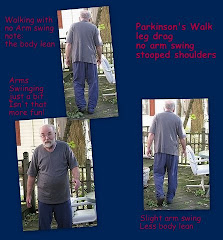
"Get another pair of shoes, you're dragging your leg when you walk"
"Get a new pen, your handwriting has changed"
"That tingling is the beginning of carpal tunnel, get a wrist rest"
"Try these pills to help you sleep or for your depression"
"Who wouldn't be depressed, you're not sleeping enough"
And so a few years pass and the next symptoms appear and you make that dreaded appointment. Afraid to know but afraid to delay treatment.
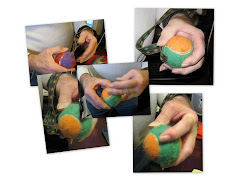
When that tremor appears, people know it is time. The good news for many is that that an action or a postural tremor is not PD. Sometimes it is a sign of Essential Tremor, which isn't curable but in many cases more manageable. And you can drink to that. But that postural tremor which occurs not when the limb is at rest but rather when performing an action can also be a sign of renal or liver failure, of hyperthyroidism, of Dystonia; it can be caused by medications, hypoglycemia or Fragile X Syndrome(FXTAS). The list is long and the diagnosis needs a professional so that the proper treatment can be initiated.
Then there are the people diagnosed with Parkinson's Disease who actually have Parkinson's Plus: the Multiple System Atrophy group (MSA), Progressive Supra-nuclear Palsy (PSP), Dementia with Lewy Bodies (DLB) and Corticobasal Ganglionic Degeneration (CBGD). There is even Parkinson's with ALS The correct diagnosis is necessary to avoid delaying the correct treatment to improve quality of life.

.
Although there is not always good news, there are helpful online sites for many conditions. The Parkinson's sites are listed in the right hand column here as Helpful Links. For Parkinson's Plus one of the most informative sites is actually eMedicine from WebMD. The National Institute of Neurological Disorders and Stroke (NINDS) provides a brief but helpful overview of tremor. So does Medline Plus. You can read about Essential Tremor at several sites. In our opinion the best site for Essential Tremor information is WeMove.org. Another site with a helpful chart of pathology of the nervous system is Wikipedia.
The point is that if you are prepared for your doctor's appointment by having a symptom journal, you can be not only proactive in providing some of the information needed to make the most accurate diagnosis but you can also become a significant part of your medical team. And yes, you are going to need you.
 We know of patients who have been told to go home to die. While having your financial affairs in the best order possible and by spending quality time with family and friends is excellent advice for everyone, we just heard a patient's take on that give-up advice from a very courageous woman. When told that there was nothing she could do for her MSA, she asked the doctor if he would give his wife, daughter, mother or sister that same advice. He saw her point and treatment became interactive. We think she's doing very well in finding a course of alternative treatment. She said she had no choice, she wanted to live and there was no hope by following the doctor's advice.
 Even if those early warning signs don't send you to the doctor, at least make a mental or written note. If the symptom persists, pay attention, your body is telling you something that could be important.


 Posts
Posts