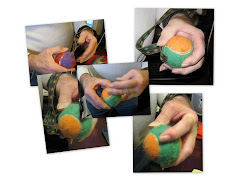
More Chair Exercises for Parkinson's Disease
Shoulder Exercise - Trapezius Stretch
Sitting upright - head up - eyes forward - hands at rest in your lap or on your knees
Raise your ribcage so that you free up your diaphragm for breathing
Slowly raise your arms in front of you and to a full upright position over your head
Arms as close to your ears as possible
Try to grasp your thumbs to help with the stretch.
Depending upon the chair armed or armless - pick one
Armed: bring your arms down slowly in front of you and return your hands to your knees, thighs or lap
Armless: Move your arms to the side-parallel to the floor, bring your arms down and slowly return them to the starting position.
Repeat your stretch 4 more times.
Make sure that your can breathe by raising-opening the rib cage as you sit in an upright position
Flap Your Wings
Sitting upright - head up - looking ahead
Make fists and turn them thumbs to the sky
Bend your arms - and anchor your hands at the front of your rib cage - thumbs up
Flap your arms from the elbows.
Moving your arms back is more important than front move for this flap.
Can you feel the stretch?
Repeat a few times
Bodybuilders Posture without the shoulder drop or body twist
Same position - same fists at ribcage
Elbows lead - wrists may follow the arms forward
Resist the impulse to bend into the movement - try to remain erect.
Repeat 4 times to feel the shoulder (trapezius) stretch and the stretch of the triceps.
We will continue to add other chair exercises as they are developed.
Please feel free to contact us if you have questions or comments.
Concerning the weaker side of the body:
We have found that often during these exercises it is necessary for the assistant/the reader to hold the strong side so that the weaker side can exercise. Sometimes it is necessary to guide the weaker side once as an example. Do not be upset if there is additional tremor. That is not surprising because these motions can be intense for stiff muscles.
Previously posted chair exercises:
http://parkinsonsfocustoday.blogspot.com/2009/02/shakin-all-over.html
http://parkinsonsfocustoday.blogspot.com/2009/02/arm-swing-exercise-for-parkinsons.html
Showing posts with label Parkinson's Disease exercises. Show all posts
Showing posts with label Parkinson's Disease exercises. Show all posts
Friday, February 27, 2009


Thursday, February 26, 2009
Let's Do the Parkinson's Swing
Arm Swing Exercise for Parkinson's Disease
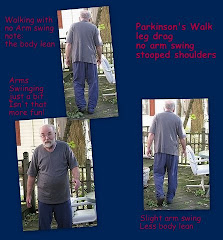
Since PD patients are often stiffer and weaker on one side in the earlier stages of PD, one of the things that suffers is gait which is somewhat dependent upon the arms for balance. If the arms don't swing, the stride usually shortens to compensate for the lack of shoulder and arm movement as well as the leg stiffness on the "bad" side. And of course, balance also becomes problematic.
Just telling yourself to swing your arms is not going to do it. You have to practice through exercise...regularly!
Sit in a chair - preferably a chair without arms - or one narrow enough that your arms can hang over the sides
Can you swing both arms? Together? In opposition?
If you can't, here's the exercise. You might need an assistant.
This is pretty simple but not necessarily easy.
If you have trouble, your assistant should hold the stronger arm in place while you work the weaker side.
Don't let the stronger side arm move. Just hold while the weaker-stiffer side performs the exercise once.
After the shoulder raises - the Shrug - is completed and the Forward and Back is also performed - release the arm
Get the shoulders moving first - we've done this before - the shoulders will help to propel you as well as provide balance.
Sit tall - head up - eyes forward
Raise the shoulders - let fall - raise both shoulders and let fall
Now alternate: raise the right shoulder only - let fall
Then the left shoulder: rise and fall
Together up and down - up and down
Shake it out
Sitting erect in your chair - head up - eyes forward
Swing your right arm front to back - reach back - swing forward
The shoulder will assist as it rises and falls with the swing.
Now repeat with the left arm
Next you will try alternate arm swing using both arms
Get the weaker side going first: forward-back-forward
Now the stronger side: forward-back
Keep the shoulders involved with the swing.
Now we're going to march in place with the arms swinging.
Sit erect - knees and feet comfortable apart for your march
(March them out now to that place)
Just as your assistant held your strong arm in place, if you have a problem raising the leg from the hip,
the strong leg should be held in place while you raise the weaker leg a few times. Release the leg
Lets March in Place.
Get the march going by raising first one leg from the hip, stepping down (heel first) and repeating with the other leg
Add the arm swing.
Music Maestro:
http://www.dws.org/sousa/works.htm
We're going to suggest the slower Wedding March for this exercise.
You might also like Riders for the Flag, Washington Post or the familiar Stars and Stripes Forever.
When you have completed your march with your arms swinging it is time to stand by leaning forward, rise from the chair
and march or walk down the hall or around the room.
Your stride goal is the one foot steps down a full foot length or more in front of the other.
If you have a freeze issue, your assistant must be ready with your key words to break the freeze and prevent a fall.
What we are doing with this exercise is similar to both the nautilus work favoring the weak side and the swim therapy marching with knees up and arms swinging except no equipment and no water.
The thing about Parkinson's is that unlike recovering from an injury or surgery, the body will stiffen again. These exercises must be done at least 3 times a week.
Did you know that 5-6 hours of vigorous exercise a week will raise the endorphin and dopamine levels? That should help ease some of your Parkinson's disease symptoms, however briefly.
Note: This is another in the series of exercises I designed to help Steve with his short stride. You will find that they are more strenuous than they might appear at first glance.
Marge
Since PD patients are often stiffer and weaker on one side in the earlier stages of PD, one of the things that suffers is gait which is somewhat dependent upon the arms for balance. If the arms don't swing, the stride usually shortens to compensate for the lack of shoulder and arm movement as well as the leg stiffness on the "bad" side. And of course, balance also becomes problematic.
Just telling yourself to swing your arms is not going to do it. You have to practice through exercise...regularly!
Sit in a chair - preferably a chair without arms - or one narrow enough that your arms can hang over the sides
Can you swing both arms? Together? In opposition?
If you can't, here's the exercise. You might need an assistant.
This is pretty simple but not necessarily easy.
If you have trouble, your assistant should hold the stronger arm in place while you work the weaker side.
Don't let the stronger side arm move. Just hold while the weaker-stiffer side performs the exercise once.
After the shoulder raises - the Shrug - is completed and the Forward and Back is also performed - release the arm
Get the shoulders moving first - we've done this before - the shoulders will help to propel you as well as provide balance.
Sit tall - head up - eyes forward
Raise the shoulders - let fall - raise both shoulders and let fall
Now alternate: raise the right shoulder only - let fall
Then the left shoulder: rise and fall
Together up and down - up and down
Shake it out
Sitting erect in your chair - head up - eyes forward
Swing your right arm front to back - reach back - swing forward
The shoulder will assist as it rises and falls with the swing.
Now repeat with the left arm
Next you will try alternate arm swing using both arms
Get the weaker side going first: forward-back-forward
Now the stronger side: forward-back
Keep the shoulders involved with the swing.
Now we're going to march in place with the arms swinging.
Sit erect - knees and feet comfortable apart for your march
(March them out now to that place)
Just as your assistant held your strong arm in place, if you have a problem raising the leg from the hip,
the strong leg should be held in place while you raise the weaker leg a few times. Release the leg
Lets March in Place.
Get the march going by raising first one leg from the hip, stepping down (heel first) and repeating with the other leg
Add the arm swing.
Music Maestro:
http://www.dws.org/sousa/works.htm
We're going to suggest the slower Wedding March for this exercise.
You might also like Riders for the Flag, Washington Post or the familiar Stars and Stripes Forever.
When you have completed your march with your arms swinging it is time to stand by leaning forward, rise from the chair
and march or walk down the hall or around the room.
Your stride goal is the one foot steps down a full foot length or more in front of the other.
If you have a freeze issue, your assistant must be ready with your key words to break the freeze and prevent a fall.
What we are doing with this exercise is similar to both the nautilus work favoring the weak side and the swim therapy marching with knees up and arms swinging except no equipment and no water.
The thing about Parkinson's is that unlike recovering from an injury or surgery, the body will stiffen again. These exercises must be done at least 3 times a week.
Did you know that 5-6 hours of vigorous exercise a week will raise the endorphin and dopamine levels? That should help ease some of your Parkinson's disease symptoms, however briefly.
Note: This is another in the series of exercises I designed to help Steve with his short stride. You will find that they are more strenuous than they might appear at first glance.
Marge
Friday, February 20, 2009
Shakin' All Over
Chair Exercises for Parkinson's Disease
Not only is it hard to find space to exercise on the floor, it is difficult to get to the floor when you have Parkinson's disease. Okay, sometimes not so difficult but sometimes hard to get up. Balance is an issue so you often need a spotter; but not as much so with chair exercises. And you can do these at work or anyplace.
The exercises are designed to help balance, walking stride, leg and ankle flexibility, posture (spine), neck and shoulder muscles, throat muscles and breathing; Parkinson's disease symptoms.
So begin by sitting down and then sitting tall. You may use a chair with arms as long as it isn't too tight a fit to move your arms. A desk chair should work just fine.
Remember head and gaze "up" or following the direction of your body. Your spine will follow the direction of your gaze. If you look down when your body should be erect, your spine will curve following the gaze. You horseback riders know what I mean. If you look down, that message will be conveyed through your spine/seat to the horse and your mount will follow that direction and shorten stride.
All of these exercises except the last will be done in a sitting position without leaving your chair.
note: I prefer to close my eyes so that I can focus and feel. You might not. Your call
If you have a partner who will read these to you, so much the better
If you are working with a partner and cannot complete the motion, the partner should move that limb or joint. This should be done with two hands, one to stabilize and the other to perform the motion. Feel that motion.
If you have a full length mirror, use it - eyes open
Shoulders Down and Up
Let your arms drop to your sides - body erect
Begin by pushing your shoulders down firmly. Head up.
You should feel the pull in your shoulders and neck.
Relax your shoulders.
Repeat three times.
If you cannot tell if your shoulders are down - put a hand on the opposite shoulder or have your exercise partner help move your shoulders into position once or twice.
Raise your shoulders, ignore the spine cracking and try to touch your ears with your shoulders - no cheating - don't drop your head!
Relax your shoulders. Repeat three times.
Now alternate between shoulders raised and shoulders down. Sit Straight. Repeat three times
Shake your arms to loosen up
Shoulders forward and back
Instead of a shoulder roll which may be difficult to coordinate, let's do a "simple" shoulders forward and back.
 Sit straight, eyes forward, hands in your lap.
Move your shoulders forward and then back to the original erect position.
Move your shoulders back and return to the original position.
Next combine the shoulders forward and back but this time bring your straight arms with you so that the hands almost touch in forward position when your elbows bend.
The arms will come back with the shoulders but will bend and the hands will form fists which help propel the shoulders back.
Forward - Middle - Back - Middle and repeat three times
Try not to move your torso - shoulders and arms only - moving as smoothly and as strongly as possibly.
You should feel the last combination in your shoulders, spine, arms and in your lats (latissimus dorsi)
Chin PressesSitting erect, look straight ahead.
Now lower your chin to your upper chest.
Do not alter your straight posture. Eyes looking straight ahead.
You should feel tension in eyelids and brows as you force your eyes to look straight ahead - not down.
And relax.
Repeat three times.
You should feel this one at the back of the neck, the spine, the jaw muscles and even your eyes as you look ahead.
Say AH
Staying in an erect posture tilt your head back as far as you can while still maintaining your balance.
Say "AH"
Louder, I can't hear you.
"AHHHHHHH" as deeply and as loudly as you can.
Better: "AHHHHHHHHHHHHHHHHHHHHH"
Straighten your head, inhale from the diaphragm through the chest - HOLD IT and slowly exhale "AHHHHHHHH" as the air moves from your lungs.
Take some shallow breaths and repeat once more.
Shake out your shoulders and roll your head if possible. Not too fast, just enough so that those muscles don't stay tensed.
Smile - and breathe.
Next we're going to target those stiff legs including the feet and ankles.
Sitting straight but comfortably, cup (support) your knees with your hands. If you have finger curl in one hand, help that hand get a grip and then position the stronger hand.
Heel lifts and toe raisesRaise your toes and the balls of your feet from the floor by rocking your feet back on your heels. Foot back down. Repeat three times.
Raise your heels from the floor by lifting with the balls of your feet. HOLD. Heels slowly down. Repeat three times.
Next we will combine toe lifts and heel lifts. Raise toes - down - lift heels - down and repeat
If possible do alternate moves with each foot at the same time: lift the heel of one foot while raising the toes and ball of the other foot.
This is difficult for PD patients and may not be possible at this time-No matter-Do the combined with both feet: heel lift followed by toe raise.
The important thing is to involve the foot and the ankle in an exaggerated walking position.
If you have a problem with getting a good lift and rock, move your feet closer to the chair (and your body)
Side to side on your heels and toesWith your heels raised, move your feet from side to side. Just wiggle them right and left.
Repeat with your toes raised - weight on your heels. Just shake them all around.
Obviously this one is about your ankles
Shake it out - arms, feet and sit erect and get ready to march
Marching in place
(see: below if you'd like some march music for audio accompaniment)
This exercise is to encourage lifting the leg so that the foot steps down rather than slides along the floor.
Try this exercise with the knees and feet at various distances apart.
Begin with your feet and knees only a few inches apart.
Remain comfortably erect - eyes forward (remember marching band?)
Hands and arms may be on the arms of your chair or arms crossed in front of you close to shoulder height or at the sides of your hips or thighs.
Lift from the hip and alternate between the left and the right leg. March in place.
Move or better yet march your feet and knees apart by several more inches - which will open the hips as well. March in place, coming down firmly.
Remember that even in the march, the heel lands on the floor a millisecond before the balls of the feet and the toes.
If you are in an armless chair, try to add arm swing to your march. Arms going forward and back to your march.
Touching your toesThis is a stretching exercise which will involve as much of your body as you can.
Begin in a erect posture
Head up - eyes forward
Hands resting on your knees
Legs at the knees approximating a 55-60o angle
Knees at least 12" apart which will position your Feet about 12"-15" apart.
Your bend will be from your hips - your upper torso, neck and head will follow because the hinge is your hip

Slide your hands down the front of your legs as far as they will go.
How far is enough? When you can feel the slight pain in the back of your thighs
Your gaze will focus ahead - don't follow your fingertips unless you are reaching well beyond your toes.
Hold
Slowly straighten, drawing your arms and hands back to their original position on your thighs as your body returns to an open, erect posture.
Repeat 5 times slowly.
Cooling down
Sit erect, raise your arms in front of you and then over your head - stretch - inhale and exhale - slowly return your arms to your thighs.
Repeat three times.
Shake your chest from your waist and hips.
Holds your arms out and shake arms, wrists and hands.
Out of the chair
Stand and walk down a hall or someplace which offers you unobstructed room to walk.
Try to walk with as much of your body as possible.
The walking step should be such that one foot clears the other at least completely (more is better in this case.)
Stride or march up and down the hall - head up - eyes up.
You may find that marching is more effective than walking since there is a helpful rhythm to marching.
You were terrific!
Thank you
Marge
Notes: These I designed these exercises for Steve to address some of the problems he has walking. Since he also has arthritis in his knees, they had to be low impact. Because he has Parkinson's they had to assist in helping PD issues of stiffness, shuffle, breathing and using both sides of the body.
If you have a problem printing this article, just Contact Us; we'll email you a copy of the chair exercises or any of the exercise sets in the other articles. Just be sure to specify the title and date of the article.
March Music link: http://www.dws.org/sousa/works.htm Hold the shift key down while clicking the link to open the music in another window so that you can march to the music.
Not only is it hard to find space to exercise on the floor, it is difficult to get to the floor when you have Parkinson's disease. Okay, sometimes not so difficult but sometimes hard to get up. Balance is an issue so you often need a spotter; but not as much so with chair exercises. And you can do these at work or anyplace.
The exercises are designed to help balance, walking stride, leg and ankle flexibility, posture (spine), neck and shoulder muscles, throat muscles and breathing; Parkinson's disease symptoms.
So begin by sitting down and then sitting tall. You may use a chair with arms as long as it isn't too tight a fit to move your arms. A desk chair should work just fine.
Remember head and gaze "up" or following the direction of your body. Your spine will follow the direction of your gaze. If you look down when your body should be erect, your spine will curve following the gaze. You horseback riders know what I mean. If you look down, that message will be conveyed through your spine/seat to the horse and your mount will follow that direction and shorten stride.
All of these exercises except the last will be done in a sitting position without leaving your chair.
note: I prefer to close my eyes so that I can focus and feel. You might not. Your call
If you have a partner who will read these to you, so much the better
If you are working with a partner and cannot complete the motion, the partner should move that limb or joint. This should be done with two hands, one to stabilize and the other to perform the motion. Feel that motion.
If you have a full length mirror, use it - eyes open
Shoulders Down and Up
Let your arms drop to your sides - body erect
Begin by pushing your shoulders down firmly. Head up.
You should feel the pull in your shoulders and neck.
Relax your shoulders.
Repeat three times.
If you cannot tell if your shoulders are down - put a hand on the opposite shoulder or have your exercise partner help move your shoulders into position once or twice.
Raise your shoulders, ignore the spine cracking and try to touch your ears with your shoulders - no cheating - don't drop your head!
Relax your shoulders. Repeat three times.
Now alternate between shoulders raised and shoulders down. Sit Straight. Repeat three times
Shake your arms to loosen up
Shoulders forward and back
Instead of a shoulder roll which may be difficult to coordinate, let's do a "simple" shoulders forward and back.
 Sit straight, eyes forward, hands in your lap.
Move your shoulders forward and then back to the original erect position.
Move your shoulders back and return to the original position.
Next combine the shoulders forward and back but this time bring your straight arms with you so that the hands almost touch in forward position when your elbows bend.
The arms will come back with the shoulders but will bend and the hands will form fists which help propel the shoulders back.
Forward - Middle - Back - Middle and repeat three times
Try not to move your torso - shoulders and arms only - moving as smoothly and as strongly as possibly.
You should feel the last combination in your shoulders, spine, arms and in your lats (latissimus dorsi)
Chin PressesSitting erect, look straight ahead.
Now lower your chin to your upper chest.
Do not alter your straight posture. Eyes looking straight ahead.
You should feel tension in eyelids and brows as you force your eyes to look straight ahead - not down.
And relax.
Repeat three times.
You should feel this one at the back of the neck, the spine, the jaw muscles and even your eyes as you look ahead.
Say AH
Staying in an erect posture tilt your head back as far as you can while still maintaining your balance.
Say "AH"
Louder, I can't hear you.
"AHHHHHHH" as deeply and as loudly as you can.
Better: "AHHHHHHHHHHHHHHHHHHHHH"
Straighten your head, inhale from the diaphragm through the chest - HOLD IT and slowly exhale "AHHHHHHHH" as the air moves from your lungs.
Take some shallow breaths and repeat once more.
Shake out your shoulders and roll your head if possible. Not too fast, just enough so that those muscles don't stay tensed.
Smile - and breathe.
Next we're going to target those stiff legs including the feet and ankles.
Sitting straight but comfortably, cup (support) your knees with your hands. If you have finger curl in one hand, help that hand get a grip and then position the stronger hand.
Heel lifts and toe raisesRaise your toes and the balls of your feet from the floor by rocking your feet back on your heels.
 Foot back down. Repeat three times.
Raise your heels from the floor by lifting with the balls of your feet. HOLD. Heels slowly down. Repeat three times.
Next we will combine toe lifts and heel lifts. Raise toes - down - lift heels - down and repeat
If possible do alternate moves with each foot at the same time: lift the heel of one foot while raising the toes and ball of the other foot.
This is difficult for PD patients and may not be possible at this time-No matter-Do the combined with both feet: heel lift followed by toe raise.

The important thing is to involve the foot and the ankle in an exaggerated walking position.
If you have a problem with getting a good lift and rock, move your feet closer to the chair (and your body)
Side to side on your heels and toesWith your heels raised, move your feet from side to side. Just wiggle them right and left.
Repeat with your toes raised - weight on your heels. Just shake them all around.
Obviously this one is about your ankles
Shake it out - arms, feet and sit erect and get ready to march
Marching in place
(see: below if you'd like some march music for audio accompaniment)
This exercise is to encourage lifting the leg so that the foot steps down rather than slides along the floor.
Try this exercise with the knees and feet at various distances apart.
Begin with your feet and knees only a few inches apart.
Remain comfortably erect - eyes forward (remember marching band?)
Hands and arms may be on the arms of your chair or arms crossed in front of you close to shoulder height or at the sides of your hips or thighs.
Lift from the hip and alternate between the left and the right leg. March in place.
Move or better yet march your feet and knees apart by several more inches - which will open the hips as well. March in place, coming down firmly.
Remember that even in the march, the heel lands on the floor a millisecond before the balls of the feet and the toes.
If you are in an armless chair, try to add arm swing to your march. Arms going forward and back to your march.
Touching your toesThis is a stretching exercise which will involve as much of your body as you can.
Begin in a erect posture
Head up - eyes forward
Hands resting on your knees
Legs at the knees approximating a 55-60o angle

Knees at least 12" apart which will position your Feet about 12"-15" apart.
Your bend will be from your hips - your upper torso, neck and head will follow because the hinge is your hip

Slide your hands down the front of your legs as far as they will go.
How far is enough? When you can feel the slight pain in the back of your thighs
Your gaze will focus ahead - don't follow your fingertips unless you are reaching well beyond your toes.
Hold
Slowly straighten, drawing your arms and hands back to their original position on your thighs as your body returns to an open, erect posture.
Repeat 5 times slowly.
Cooling down
Sit erect, raise your arms in front of you and then over your head - stretch -
 inhale and exhale - slowly return your arms to your thighs.
Repeat three times.
Shake your chest from your waist and hips.
Holds your arms out and shake arms, wrists and hands.
Out of the chair
Stand and walk down a hall or someplace which offers you unobstructed room to walk.
Try to walk with as much of your body as possible.
The walking step should be such that one foot clears the other at least completely (more is better in this case.)
Stride or march up and down the hall - head up - eyes up.
You may find that marching is more effective than walking since there is a helpful rhythm to marching.
You were terrific!
Thank you
Marge
Notes: These I designed these exercises for Steve to address some of the problems he has walking. Since he also has arthritis in his knees, they had to be low impact. Because he has Parkinson's they had to assist in helping PD issues of stiffness, shuffle, breathing and using both sides of the body.
If you have a problem printing this article, just Contact Us; we'll email you a copy of the chair exercises or any of the exercise sets in the other articles. Just be sure to specify the title and date of the article.
March Music link: http://www.dws.org/sousa/works.htm Hold the shift key down while clicking the link to open the music in another window so that you can march to the music.
Subscribe to:
Posts (Atom)


 Posts
Posts