Showing posts with label msa. Show all posts

Thursday, April 22, 2010

Coping with Problems of Postural Instability in Parkinson's Disease

Preventing those PD falls and What to do when you do fall

In the TRAP of Parkinson's disease, postural instability is the last of the big 4 symptoms. It is also the symptom which can lead to one of the leading causes of death for PD patients.

Postural instability can be caused by Parkinson's disease or can be related to syncope (fainting); orthostatic hypotension as a side effect of medications taken either for PD; neurogenic orthostatic hypotension as a result of a condition such as MSA; a cardiac condition, medication-induced dyskinesia, or another issue. Postural instability can also be a byproduct of depression for which PD does not lack.

Because there is little help through medication, that leaves devices, caregivers, exercise and the patient to recover from a fall or to better train the body to withstand the problems of postural instability.

Although I do not trust a lightweight walker for stability in heavy lifting, it might be of value if that is all that is around. It can be used for the patient to pull himself/herself up if someone is present to stabilize the walker. Otherwise both patient and walker could fall over. A cane with those extra legs at the bottom might do the job if there is arm strength.

There is also value to having handrails installed in hallways and even bathrooms just as they are on stairways. Avoiding backless chairs or stools is also advisable in order to avoid the risk of retropulsion - leaning back to regain balance or because of loss of balance with the resultant fall.

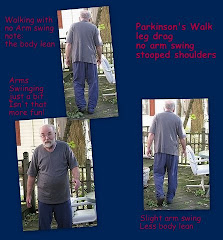
One important aid is exercise. Gait exercise can be crucial. We suggest asking for a referral to a therapy center so that gait training can be initiated. Gait training would include lengthening of stride, learning to open at the hips for a wider stance. The smaller the space between the legs, the less option to maintain balance. Lifting the legs almost in a march rather than shuffling and sticking to the floor may also be of value to provide a mental and physical cadence and to decrease the risk of the tripping on the shuffle.

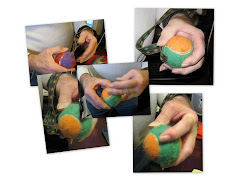
Exercise addresses range of motion, flexibility stretching and yes, even strength training (to assist in rising if you do fall) and breathing. Yoga and Tai Chi exercises can help with balance and even graceful falling. Nautilus is important exercise equipment and there are less expensivel pieces of exercise equipment which can be purchased for home use. Don't neglect hand exercises. Being able to grip is crucial; a weak or claw-like hand won't help you.

Dance therapy might be helpful. Although its effects will not be physically apparent after the music stops, there might be a psychological-confidence effect which impacts postural instability due to PD depression. And it's FUN! Even in your living room. Get those endorphins going.

Locate a therapy center which has Forced Exercise equipment and aqua therapy. Water exercises can be beneficial to a PD patient because of the buoyancy effects of exercising - marching in the water. And Forced Exercise - not on a treadmill in this case unless there are trained spotters or with a support vest which attaches to the ceiling - but on the motorized exercise bicycles which compensate for the patient's inability to maintain the necessary rpms on his own. For some people these bikes are an affordable option for home use - for others, they are not. But the bike must be able to maintain between 80-90 rpm. There are two types of therapeutic bikes for this purpose. One is the Theracycle (there should be an ad link on this page). The other company is Reck MotoMed which makes several styles for home and therapy center usage.

Naturally there are aids such as shower seats (with backs or transfer seats), grab bars in the tub/shower area (no suction cups please), hand-held shower-heads with longer hoses and on-off buttons to prevent unnecessary standing in the shower. Soap on a rope.

No PD home should be without bath/shower aids even if they are not needed immediately. Knowing how to use them and using them regularly helps to train the body so that when the equipment is needed, there is kinetic memory to reinforce the use patterns. (Yes, I am a believer in the possibilities of kinetic memory to resist the tightening muscles and we have seen it work with my husband in entering/exiting the shower after the side effects of dehydration - another story - had some temporary but dire cognitive effects).

Little is available to address postural instability in PD. Usually discussed as a later PD symptom because it is apparent then, to many it is an invisible side effect as a very early symptom. Everyone talks about falls, the risks, prevention and the role they play, but we haven't found many solutions to address the problem by fixing the chemical imbalances which cause it because we are not sure precisely where in the brain the problem originates although the focus is on the brain stem.

There is one rather expensive pneumatic device which can be used in the home to aid in lifting and there appear to be patent applications for more. The link to this inflatable device is provide below at a site with which we are unfamiliar.

Have a home safety evaluation conducted. These are often done by occupational therapists - they'll survey the home, watch the patient functioning in their own environment and make safety recommendations. They need to know the patient has fallen in the past and what the ensuing problems have been.

The process for assisting a patient who has fallen is step by step after you are sure there has been no injury. Do not move an injured person. Make the call for emergency medical assistance. Or use that MedAlert button.
No injuries? Whew! Let's catch our breath. Everybody breathe calmly a few times to relax.
  • Encourage the patient to roll from the landing position to a prone face down position. You may be able to assist with that.
  • Next the patient must raise the upper torso onto bent arms. The lower part of the arm is on the floor.
  • The buttocks are next, assisted by the knees.
  • With weight on the forearms, rock forward and then back as you use those abdominals to lift your butt into the air.
  • The knees will walk forward and assist with the push up.
  • Once the patient is on his/her knees, you can assist them if they need help. If they are unable to rise from a kneeling position, they may be able to pull up on sturdy furniture or walker. Or you may be able to brace them (their arm around your shoulders and both of you rise from a kneeling position. The caregiver must keep a straight back to avoid injury.
  • If you are alone, you may be able to crawl on your knees to furniture solid enough to provide support for the pull to a standing or seated position.
At this point prevention and exercise seem to be the best methods to reduce the risks. Many caregivers are simply not strong enough to pull or lift a person lying on the floor without assistance. This is also another argument for the other forms of exercise accompanied by strength training.

additional reading:
Chronic Dizziness and Postural Instability

Links to inflatable device and detailed advice on its usage:
Same information if you can't view pdf format:

It's being called WiiHab and we already know that it can help with PD depression, what about postural instability? As a diagnostic it has been found to be effective:
Validity and Reliablity of the Nintendo Wii Board for Assessment of Standing Balance

To try the Wii at home: you'll need the Nintendo console, the balance board and some accessories such as the WiiFit program and controllers. The balance board must be on a firm surface to work properly. If balance is a serious problem, make sure you have support or supporters handy.
For more information check Wikipedia before you buy

Monday, March 29, 2010

Differential Diagnoses and Parkinson's Disease

What do the stereotypes mean for you and PD?

We already know that the precursor symptoms of Parkinson's disease can show their presence years before the disease is full blown and diagnosable.  We always want to be reassuring or to be reassured when we notice them. So we tell each other and ourselves:

"Oh, it's nothing"
"You're just stressed"
"Well who wouldn't have sleeping problems, you're depressed"
"Losing your sense of smell is convenient, now you can avoid changing the cat box"
"Perhaps that neck and shoulder pain is from the way you sit at the computer"
"Get another pair of shoes, you're dragging your leg when you walk"
"Get a new pen, your handwriting has changed"
"That tingling is the beginning of carpal tunnel, get a wrist rest"
"Try these pills to help you sleep or for your depression"
"Who wouldn't be depressed, you're not sleeping enough"

And so a few years pass and the next symptoms appear and you make that dreaded appointment.  Afraid to know but afraid to delay treatment.

When that tremor appears, people know it is time. The good news for many is that that an action or a postural tremor is not PD. Sometimes it is a sign of Essential Tremor, which isn't curable but in many cases more manageable.  And you can drink to that.  But that postural tremor which occurs not when the limb is at rest but rather when performing an action can also be a sign of renal or liver failure, of hyperthyroidism, of Dystonia; it can be caused by medications, hypoglycemia or Fragile X Syndrome(FXTAS). The list is long and the diagnosis needs a professional so that the proper treatment can be initiated.

Then there are the people diagnosed with Parkinson's Disease who actually have Parkinson's Plus: the Multiple System Atrophy group (MSA), Progressive Supra-nuclear Palsy (PSP), Dementia with Lewy Bodies (DLB) and Corticobasal Ganglionic Degeneration (CBGD).  There is even Parkinson's with ALS The correct diagnosis is necessary to avoid delaying the correct treatment to improve quality of life.

Let's face it, for many people it may seem to be less frightening if they can arm themselves with information before their doctor's appointment. Reading about conditions can actually help you prepare a more thorough list of symptoms. Other people only want to know more after the diagnosis. Before getting any on-line prompts and suggestions, it's a good idea to make that list of all  your symptoms and when they occur. That way you won't be as easily swayed by suggestion.
 .
Although there is not always good news, there are helpful online sites for many conditions.  The Parkinson's sites are listed in the right hand column here as Helpful Links.  For Parkinson's Plus one of the most informative sites is actually eMedicine from WebMD.  The National Institute of Neurological Disorders and Stroke (NINDS) provides a brief but helpful overview of tremor. So does Medline Plus.  You can read about Essential Tremor at several sites.  In our opinion the best site for Essential Tremor information is WeMove.org.  Another site with a helpful chart of pathology of the nervous system is Wikipedia.

The point is that if you are prepared for your doctor's appointment by having a symptom journal, you can be not only proactive in providing some of the information needed to make the most accurate diagnosis but you can also become a significant part of your medical team.  And yes, you are going to need you.

We know of patients who have been told to go home to die. While having your financial affairs in the best order possible and by spending quality time with family and friends is excellent advice for everyone, we just heard a patient's take on that give-up advice from a very courageous woman. When told that there was nothing she could do for her MSA, she asked the doctor if he would give his wife, daughter, mother or sister that same advice. He saw her point and treatment became interactive. We think she's doing very well in finding a course of alternative treatment. She said she had no choice, she wanted to live and there was no hope by following the doctor's advice.    

Even if those early warning signs don't send you to the doctor, at least make a mental or written note.  If the symptom persists, pay attention, your body is telling you something that could be important.

Thursday, March 11, 2010

Attention for Young Onset Parkinson's Disease


There isn't nearly enough discussion of early or young onset PD

Young Onset Parkinson Conference

National Parkinsons Foundation-NPF and the American Parkinson Disease Association, Inc are co-sponsoring the 2nd
Joint Young Onset Parkinson Disease Conference in Sacremento, California. We are all fortunate to be able to join part of the conference from the comfort of our homes on Saturday, March 13, 2010 - 9:00am to 1:15pm Pacific Time and noon to 4:15pm Eastern Standard Time.

All you need to do is to register at the APDA website and tune in at your equivalent time zone start time. Or you can select the sessions you wish to see and join then. So click on the link to go to the American Parkinson Disease Association (APDA) to register for the webcast
Below is the Saturday, March 13th Webcast Agenda
The webcast agenda begins at 9:00 am pacific standard time for us we:ll join at Noon EST

9:00-10:15 am
The Electric Brain: Tailoring DBS Therapy for Parkinson’s Disease Patients
Michael S. Okun, MD
10:45 - 12:00
Complementary Therapies: Expanding your Symptom Management Options
Melanie M Brandabur, MD, MDS
1:30 - 2:45 pm
Update on Gene Therapies for Parkinson’s Disease
Michael J. Aminoff, MD, DSc, FRCP
3:00 pm - 4:15 pm
Parkinson's Disease Treatment: Is Exercise Really Medicine?
Jay Alberts, PhD
We've watched several short videos by Dr Alberts and we're really excited about the chance to hear a longer discussion. It is possible that in addition to the benefits of exercise and specifically of Forced Exercise which has been shown to reduce symptom severity and reduce reliance on medication for up to 4 weeks after cessation, there may be a benefit for neurogenic orthostatic hypotension. We're only speculating on the last but we're hoping to hear that on Saturday.
~~~~~~~~~~~~~~~~~
From Parkinson's Action Network (PAN)

NETPR - Neurotoxin Exposure Treatment Parkinson's Research program received $2.5 million for fiscal year 2010 in the Department of Defense Apropriation bill. This funding is an add- on each year which means that every year an effort must be extended to have it included.
The 2/17/10 16 Annual Research and Public Policy Forum has been archived but is difficult to locate at the PAN website. It is worth watching in segments, however. And as soon as we figure out how to open it, we'll let you know. If you find it first, please let us know.
Friday, March 26th 2010 is the deadline to ask your Senator to support NETPR.
Last week after the PAN webcast we wrote about the need for everyone to do their part to develop a Registry database for PD and MS that can drawn from current sources. Everyone benefits.. From the Parkinson's Action Network comes the update on the support for the National MS and Parkinson's Disease Registry.
The Importance of Advocacy
If you need a better understanding of what it is the PAN really does and why it is so important, watch the PAN Advocacy video
~~~~~~~~~~~~~~~~~~~~~
Because there are few groups for a sister disease, MSA, and less research, we thought that we should mention this news From Facebook:
Although unofficial, Miracles for MSA (Multiple System Atrophy) has asked that we observe March as MSA month. Since some people have probably been misdiagnosed with Parkinson's disease with a rapid progression when in fact they may very well have MSA, it is only fitting that we should respect and honor that wish.
~~~~~~~~~~~~~~~~~~~~
I'm sorry to say that there is still no news on the Neupro Rotigotine Transdermal Patch horizon. We'll post as soon as there is some positive news about its return to the US. There are Canadian sites where it can be ordered. We've done a bit of shopping online and the prices are high. We're working on that article and will try to get it posted in a few days.
~~~~~~~~~~~~~~~~~~~
For those who are experiencing Neurogenic Orthostatic Hypostension as a symptom of PD or medications or MSA as a result of deficient release of norepinephrine, Droxidopa from Chelsea Therapeutics while available in Japan is still in Phase III clinical trials. We have learned that for MSA patients it can be made available on an emergency hardship basis through your physician.
We'll be writing more as it is closer to being approved by the FDA.

We're enjoying the pseudo March Spring before the next onslaught of midwest snow.

The dogs waited patiently for hours below a tree for the squirrels to come down to play. No fools, the squirrels did not descend to that level.

Monday, November 10, 2008

STEM CELLS A TOP ISSUE

A senior aide to President Elect Obama says the transition team is studying President Bush's executive orders to decide which should be kept, amended or repealed.

The Senate voted on July 19th to remove restrictions on embryonic stem cell research only to have President Bush veto it the next day.

As a senator Mr Obama has supported stem cell research to find cures for diseases like Parkinson's, Alzheimer's, ALS, MS, Diabetis since 2004. He wants to be ready to hit the ground running on Jan 20th, 200 when he takes office. There's much the new President can do with his executive powers.

It is going to be vital to see what federal funding for Parkinson's will be. We need to make up for 8 years of an administration that did not grasp the importance of scientific research in terms of time, lives and health care dollars.