Showing posts with label PD medications. Show all posts

Tuesday, June 22, 2010

Webinars and Webcasts of Interest for Parkinson's Disease

For PwPs, Caregivers and Families:
You might be like to attend these online events

Drug Development Pipeline on Thursday, June 24th, 2010
2:00 pm to 4:30 pm EST
Direct from the Campus of Georgetown University, Parkinson's Action Network (PAN) is hosting "Emerging Therapies: From Microscope to Marketplace" featuring a panel of speakers from the scientific community. Each will address a different stage in the drug development pipeline process.
Howard Federoff, M.D., Ph.D.: Executive Vice President for Health Sciences and Executive Dean of the School of Medicine at Georgetown University will moderate.
The panel:
James P. Bennett, Jr., M.D., Ph.D.: Chair, Department of Neurology and Founding Director of the Virginia Commonwealth University Parkinson's Disease and Movement Disorders Multidisciplinary Research and Clinical Center
Story C. Landis, Ph.D.: Director, National Institute of Neurological Disorders and Stroke, National Institutes of Health
Raymond T. Bartus, Ph.D.: Executive Vice President and Chief Scientific Officer, Ceregene, Inc.
Jackie Hunt Christensen: PAN Minnesota State Coordinator and Clinical Trial Participant
Janet Woodcock, M.D.: Director, Center for Drug Evaluation and Research, Food and Drug Administration

Registration is not required. On the day of the Webcast, simply visit the PAN home page and tune into the Webcast from your home or office computer.
For more information on the Webcast, please e-mail PAN
Registration is not required. On the day of the Webcast, simply visit the PAN home page and tune into the Webcast from your home or office computer.
~~~~~~~~~~~~~~~~~~~~~~~~
From AARP on the same day, Thursday, June 24, 2010
"The New Health Care Law: What It Means for People with Medicare"
Times are:
2:00pm -3:00pm EST
1:00-2:00 pm CST
12:00 pm-1:00 pm MST
11:00 am -12:00 pm PST
To register at AARP for this event, click here
There will be a Question and Answer period with AARP experts
~~~~~~~~~~~~~~~~~~~~
Did you miss one of the Parkinson's Disease Foundation (PDF) Educational Events?
You can see and/or hear them here.

Saturday, May 8, 2010

How Much Antifreeze Does a Parkinson's Patient Swallow?

What the Heck Is in My PD Medication and Why?

A serious issue for people with Parkinson's disease is those times when medication wears off before the next dose is due.
Remembering to take the first dose in the morning but sometimes forgetting the next  one can be a problem as well.
That's why there are pills specially designed to address and correct/remove those problems. We know them as timed release, controlled release (CR), sustained release (SR), extended release or long acting ER, XR, or XL), slow-release, and continuous-release (CR or Contin). 

We know we can't chew them. But else do we know about how they work? What makes it possible for this timed-release to occur after the pill is swallowed?  Is it safe?  

And when we looked at the ingredients of these shinny pills. Sometimes there is polyethylene glycol (PEG) or ethylene oxide which we know is a precursor to ethylene glycol ... antifreeze...or we see propylene glycol and butylated hydroxytoluene. We learned that part of the latter is a solvent. What's the story here? Why is this stuff in a pill which is supposed to help?  How is it used?

We know that when treating certain medical conditions it can be helpful to have a medication which can be released slowly and steadily throughout the day in order to maintain a constant blood serum level of the medication. Controlled release drugs have an advantage of being somewhat cost-saving and many may actually release a safer level of the medication. Most do this fairly well; a few have unresolved issues.

The mechanism of burst-release still needs refining because on occasion more medication is released than designed. New technologies are developing which will use not polymers but possibly recently developed polypeptide agents possibly utilizing RNA and/or siRNA (small interfering RNA). Not yet, but perhaps within a few years. In London at the end of the month there will be a specific presentation for "Controlled release in chronic diseases" at a controlled release event.  And we would expect these pills to be safer as well as having a higher efficacy rate.

The mechanism is that either the drug matrix dissolves slowly and steadily or that the drug is released cyclically over a long period. The formulations may vary from chitin to acrylic to polymer based tablets with a porous membrane on one side with different processes occurring once in the body. The bursts seem to occur in the CRs but perhaps steadier control will be possible in the future.

But what about that other stuff?

According to what we've read, polyethylene glycol (PEG) - as used in medications - has a low toxicity "When attached to various protein medications, polyethylene glycol allows a slowed clearance of the carried protein from the blood. This makes for a longer acting medicinal effect and reduces toxicity, and it allows longer dosing intervals." This would explain why it is in the Extended or Controlled Release pills. Is it totally safe? Apparently for now it will have to be safe enough. Even taking several pills of this type a day should not become an issue unless there is a intestinal blockage.

The differences between PEGs are molecular weight.  What about polyethylene oxides (PEO)? We know that PEs are carcinogenic at certain ppms. But we are not chemists and that is an area for the experts to discuss.

These chemicals are sometimes used in laxatives and calcium channel blockers. The calcium channel blockers have a semi-permeable membrane which surrounds the actual drug. The core itself is bi-layered with the active layer of the medication and an inert layer, known as the "push" layer of an osmotic. And this is where we find the PEO polymer. The push layer will swell and force the active drug out of the membrane through a pre-drilled laser opening on the active layer side of the membrane. This creates a fairly steady release of the active chemicals into the gastrointestinal tract.

What happens to the inert but actively working push layer when emptied of the active drug?  It's already in the intestinal tract and so is simply taken out with the trash.

In laxatives, osmotics create excess water in the intestine to loosen stool buildups. Taken with an electrolyte solution osmotic laxatives are often used prior to bowel surgery. Some of these contain polyethylene glycol and are intended for short term use only.  Some Parkinson's patients take Polyethylene Glycol 3350, an osmotic laxative, in the form of MiraLax or Macrogol for constipation as a last resort because nothing else works for them.  The caveat is that too much or too often can result in diarrhea. Side effects include nausea, gas and bloating.

There is no question that it is not a good idea to take any medication with polyethylene glycol if you are allergic to it as it can cause rash, swollen tongue, hives and other typical unpleasant allergy reactions.

Do not confuse ethylene glycol (EG) with polyethylene glycol (PEG). They are not the same thing. Ethylene glycol is metabolized into oxalic acid, a poison that affects the brain, the heart and the kidneys. Ethylene glycol (EG) is toxic to people and to pets. Your car is happy with it because adding it to your radiator offers protection in cold weather. In your body it can kill. Polyethylene glycol makes your intestinal tract happier because it can get rid of toxins. In your body it has low toxicity.

Propylene glycol, an organic compound (a diol or double alcohol) is used as a humectant (moisture retentive) food additive E1520, as a moisturizer in medicines, toothpaste, mouthwash among others. While it does have similar properties to ethylene glycol and is used in antifreeze and de-icers; it is less toxic. And of course, toxicity would depend upon the percentage used in a product. It metabolizes to pyruvic acid, as part of the normal glucose metabolism process. Although long term toxicity is low to humans; it can be toxic to dogs and cats (although the effects are apparently different in cats). Do note that this type of alcohol is different than that which you have in a drink.

Who else has weighed in? From the CDC we learn that the FDA classifies polyethylene glycol as an additive that is "generally recognized as safe" for use in foods. In large quantities it will increase the acidity of the body. What is does not do is to form the harmful crystals which collect to the kidneys as ethylene glycol produces while it breaks down. Polyethylene glycol breaks down rapidly in the body.

Although most of the warnings we saw related to overdose of the medication itself and not the individual components, this does not mean there is not room for improvement.  As more is learned about our air, water and food, we think that more attention will be directed to medicines. It may happen very quietly within the pharmaceutical companies because of economic impact.  At the same time, the drugs taken for Parkinson's disease are immediately necessary in their available forms and changes co$t.

By the way, the chemicals are also found in most toothpastes. 

Note:  The title question is in part rhetorical, however, the answer would be based upon each individual's medicine cabinet. We looked at DynaCirc CR and Nimodipine labels for this article.

Additional Reading:
American Academy of Neurology, Quality Standards Subcommittee guidelines - published Neurology. 2010;74:924-931. http://www.medscape.com/viewarticle/718759
Long term efficacy study 2000 placebo/blind small doses of isosmotic PED electrolyte balanced solutions over 6 months was an effective constipation treatment; "appeared to be safe,tolerated and devoid of significant side effects" 
Butylated hydroxytoluene, a lipophillic (fat-soluble) organic compound that is primarily used as an antioxidant food additive as E321
Polymers in Controlled Drug Delivery by Lisa Brannon-Peppas  
The Use of Polyethylene Oxide Mixtures to Study Formulation Robustness in Hydrophillic Extended Release Matrix Tablets
Formulation of a Model Poorly Soluble Drug with Low Molecular Weight Grades of Polyethylene Oxide demonstrates Improved Aqueous Solubility

Wednesday, September 9, 2009

Worry Beads Are Well Adapted for Parkinson's Disease

I have PD and I worry...

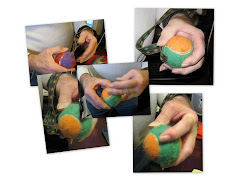
Worry stones are well adapted for Parkinson's disease. I can just put it in my left hand - you know, the one with the tremor - and not be concerned about the quiet or the loud ways of using it - I can just rub it with my thumb to defocus the tension. The problem is my unwillingness to take the stones out when I feel stressed...which is pretty much all of the time.

Over five years ago I was diagnosed with PD. In the beginning it didn't change my life very much. I could still work around the house a bit, still drove everyday, rode my bike through the park, and most importantly I still had a full time job. My appearance did not change right away and I was getting medication and alternative treatment but not the standard levadopa PD meds.

Life was fairly good even though there were some dark clouds building up. On bad days I worried. On good days I could see us living like this for years without much change. Now I know that was kinda foolish but who knows what the correct moves are when you are dealing with a chronic incurable disease. I've always thought that you usually just get one shot at it but it now seems that you get a chance every day if you mentally touch the worry beads.

Its very important to keep a positive attitude even when the whole world is going crazy. I've found I can't do it very well. Too much news about swine flu, bank failures, foreclosures, unemployment, health care disputes, plane crashes and new wars keeps me anxious and worried. Too many new symptoms or simple changes to my body scare me and make it harder to fight back against the disease. Too much knowledge makes me worry about everything. I focus on things that don't bring a laugh or a smile. Am I afraid to smile? Afraid that will bring bad luck?

My wife tells me I have not changed much, just a few new symptom's but also some that some are better. But I worry about the future, finances, progression. I am impatient for positive symptom relief and even when it appears, the triumph is short-lived because I move on to another worry.

Even I can see that my basic problem is that I have lost faith with the idea that eventually a treatment will be discovered (in time to help me.) I realize that a tremendous amount of Parkinson's research is taking place all over the world and that it is very possible that a breakthrough will happen soon. That with the right funding, trials will go forward and announcements will be made. I suppose it's even possible that it has already been discovered but not available yet because of the money involved in getting approval for new medications and treatments.

Yes I stress too much about things I can't change and I spend too much time on the Internet discovering new worries. I'd love to be working again and contributing what I know about construction or the supermarket business; but that doesn't look promising. Worrying kept me busy. I know that I am sublimating my concerns about the rest of my life by worrying about everything else but it's difficult to stop.

Worry beads are supposed to cause the litany of worries to flow out. I am learning that I am better off using that worry stone in my pocket, stroking it, calming my fears and letting the stress ease itself away.

Monday, February 9, 2009

Isradipine or DynaCirc

Isradipine, the generic instead of DynaCirc CR (R)

I've been taking Isradipine for one and one-half years to control my high blood pressure and to see if it would be effective in controlling my Parkinson's disease symptoms while slowing or stopping the progression of the disease.

Keep in mind no two Parkinson's patients are the same, so what has helped me may not help you at all, or you may not even be able to tolerate it.

That said, when I started DynaCirc CR within the first two weeks I noticed that my swallowing problems had decreased greatly, co-workers asked me why my voice sounded so much better. I felt better like I had more energy and that helped me get rid of a lot of my depression. I had been taking Mirapex, I was able to stop taking it. Once the Mirapex was out of my system, I stopped having most of the hallucinations and complusiive behavior that had been plaguing me.

My PDRS has been at 14-18, pretty much straight-lined since I started Dynacirc CR and these are the medicinal and supplemental treatments I have been taking:
Azilect 1mg/day
CoQ10 1200mg/day
Sublingual L Glutathione 300 mg daily under tongue
Atenolol 50mg/day
Lovastatin 40mg/day.
I take the following herbs and supplements: Turmeric, Saw Palmetto, Milk Thistle, Nettle Root, Omega 3 fish oils, Slippery Elm, Fenugreek, Green Tea extract, Vitamin B complex and Zinc on a temporary basis to see if it will improve my senses of taste and smell.

The last few weeks I have been comparing Dynacirc CR which contains Isradipine, a calcium agonist that crosses the blood brain barrier, with generic Isradipine because the generic drug costs me $3.00 /month and Dynacirc CR cost $151.00 for the same 30 day supply. My doctor told me they should work the same, plus or minus side effects.

I've been using generic Isradipine for three weeks now. The only negative things are having to take two 5 mg capsules instead of one. I don't think I'm taking it at the same time each day and that's giving me a little more tremor than Dynacirc CR which stays at the same level in your blood all day. It has been suggested that I could take four 2.5mg capsules to come closer to the time release effect but that would just be two more pills which I could forget to take because I hate taking any pills.

Positive effects are that I have more energy than I had before. With Dynacirc CR I took naps several days a week. Now I take naps only infrequently.