Showing posts with label stiffness. Show all posts

Wednesday, November 4, 2009

Gluten-free and my PD at Three Months

Parkinson's disease seems to open itself to a low-gluten diet

Back in July, 3 months ago, after my wife and I had done a lot of reading about Celiac Disease, I decided to try a diet without gluten for at least three months.   I hoped it would help me with some of the  Parkinson's symptoms I was suffering: sleep problems, constipation, tremor, urinary frequency, ED and stiffness/rigidity (especially getting in and out of the car. Getting dressed and undressed was also becoming an increasing problem.

I know that I should have gotten tested to see if I actually have Celiac Disease before starting the diet, but I read anecdotal reports from other PWPs who tried the diet without being DX'd and saw a reduction of their symptoms.  I really don't think that I have Celiac Disease but I might have enough intolerance to be helped.
 
My wife has made some wonderful no gluten meals and is very careful to balance flavors so that they often seem to be better tasting than full gluten meals. So staying on the diet hasn't been a problem for me, but it will be when I have to travel?  As long as someone still makes re-fried beans it won't be.  Do you know that you can make salsa using cider or rice vinegar?  My wife promises to come up with a great gluten-free stuffing to go with the turkey breast so that I'll have something for which to be thankful.

RESULTS after 3 Months: 
  • Sleep problems reduced. Now I only wake up to urinate 2 or 3 times a night
  • Constipation Is gone and I'm regular as I'm going to be with PD
  • Tremor hasn't lessened or stopped           
  • Urinary Frequency seems to be worse.  I had hoped for assistance from the dietary change but it did not happen. But there is good news,  my urinary frequency is helped by nettle root and the pumpkin seed oil I'm taking for ED.  It's better for my confidence if I wear Depends when I am at the gym to exercise or traveling, although I don't actually seem to need them as much as I need to be free of worry.
  • Erectile Dysfunction feels slightly better. ED seems to be helped by pumpkin seed oil and pycnogenol.
  • I'm still having problems with Flexibility - arthritis doesn't help and neither did cutting back on the weekly massages but at least the problems aren't worse...they just feel that way because I still have them. I'm trying to reduce my stiffness by doing stretching exercises at the gym and at home. The stiffness reduces my range of motion and makes normal actions more difficult.  
I intend to continue with our low-to-no gluten diet to see if it can bring more improvement to my health.  Most of us want to make that magic change and see all of the symptoms vanish and it is frustrating when they don't.  But there is always something else around the corner.

Tuesday, September 1, 2009

Mix and Match with Parkinson's Disease Co-drugs

Creatine Combos for PD
Parkinson's disease is different things to different people, sort of like the old one about the blind men and the elephant. Some of us follow doctor's instructions to the letter while others, myself included, are constantly stirring the mix to find something that not only slows the progression but also appears to reverse symptoms.

So I tried creatine (see: Creatine note below) again, only this round I am pairing it with the CoQ10 doses which I already take. I'm trying to take smaller amounts of CoQ10 but more often throughout the day as apparently it has some diminishing returns in large doses. To that mix I just added St John's Wort (standardized hypericum 0.3%) with an enzyme delivery system.

I tried the CoQ10-Creatine combination first but I am impatient and wasn't sure I felt any results. So I added St John's Wort a couple of days ago. Yes, we did read about the "cheese effect" for tyramine and St John's Wort but for now I'm operating under the FDA opinion that MAO-B and MAO-A really are different in effect. (And subsequent to this post, the cheese warning was removed by the FDA from Azilect, my MAO-B inhibitor)

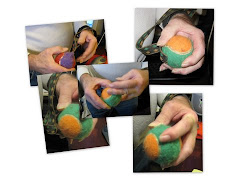
Although it has only been a few days, I think that I am less stiff; I can see and feel it in my left hand. That's my PD side. When we're driving somewhere, that's the hand my wife takes when she notices it is looking claw-like and separates the fingers, strokes and presses them down on my thigh. She's trying to make me aware of those muscles in a nice way. Sometimes she encourages me to do finger-stretching exercises in the car. Now that I have added St John's Wort to the mix, there seems to be less tension in that hand.

Do I think this change is due to the addition of St John's Wort, not really. It takes a minimum of a week to six weeks for this herb to be effective, the average is about a month. Plus the fact that I began at 600 mgs a day and not 900 mgs will also delay the onset of effectiveness...if any...No, I credit the change to the addition of creatine.

Creatine was named by French chemist Michal-Eugene Chevreul in 1832 while working as professor of chemistry specializing in the study of fatty acids at the Musee d'Histoire Naturelle. It was here that he isolated creatine as a component of skeletal muscle by extracting it from meat (muscle tissue). Twelve years later, a German scientist Justus von Liebug noticed that wild foxes (those who hunt for survival) had more intramuscular creatine than captive foxes who expended little energy to obtain food or escape predators. This has interesting implications in Parkinson's where the majority of patients appear to come from a more sedentary lifestyle.

So what do we know about creatine and CoQ10?

We know that CoQ10 is an important antioxidant because of its ability to transfer electrons. We know that the mitochondria within the cell need both CoQ10 and creatine to produce cellular energy because they function in different ways to assist that process. We also know that Parkinson's disease can be viewed as a mitochondrial disorder with decreased production of ATP (adenosine triphosphate) which has been called "molecular currency" and "the energy currency of life" without which muscles will not contract.

More than one study has pointed out the neuroprotective effects of the combination of adding creatine and CoQ10 to fight against dopamine depletion and the loss of tyroine hydroxalase neurons in the substantia nigra. In addition the addition of creatine and CoQ10 demonstrated a reduction of Lipid peroxidation - significant because that means a reduction of cell damage. It improved glutathione homeostasis with an overall effect of improving motor performance.

There are other combinations which have been the subject of study. In 2007 there ws an early PD study of CoQ10 and GP-1485, an immunophilin compound. By 2006 Symphony Neuro development Company stopped an open-label study of GP-1485 for regeneration of damaged nerves finding no demonstrated benefit.

A study of minocycline and creatine did demonstrate some benefit for ALS rat models but alone, minocycline alone did not demonstrate improvement in preventing cell death in HD models.

Creatine note: It took several years to find the "right" creatine.  At the time this article was written we were still going by trial and mostly error.
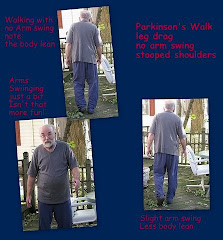
In 2010 we discovered that a smaller particle creatine monohydrate was effective in restoring slight arm swing and maintaining some muscle strength.
In 2011 we purchased pharmaceutical grade micronized creatine monohydrate and saw a dramatic change in left arm swing, should engagement (making an improvement in balance as a result) and muscle strength retention.

resources and additional reading:
The Value of combination therapies
Beneficial effects of creatine, COQ10, and lipoic acid in mitochondrial disorders
Creatine and CoQ10
Combination therapy with coenzyme Q10 and creatine produces additive neuroprotective effects in models of Parkinson's and Huntington's diesases
Beneficial effects of creatine, CoQ10 and lipoic acid in mitochondrial disorders
The Creatine Clinical Trial site at NIH
A randomized clinical trial of coenzyme Q10 and GPI-1485 in early Parkinson disease
From Harvard: Additive Neuroprotective Benefits of Minocycline with Creatine in a Mouse Model of ALS
Results of the above trial on Minocycline with Creatine - 2006
Parkinson's CoDrugs for Levadopa: Caffeic Acid and Carnosine
Creatine: The Power Supplement by Melvin H Williams, PhD; Richard B Kreider,PhD; and J David Branch, PhD is available online
Creatine

Addendum
We recently viewed an online Webinar in which Creatine was mentioned as possibly being neurprotective. We'll add updates as we learn of them.

Tuesday, February 3, 2009

The Importance of Good Breathing Techniques for Parkinson's - Part II


Okay - we know that good breathing techniques help the throat, lungs, ribcage maintain elasticity. And we know that stiffness is a serious issue in Parkinson's disease. We know that breathing through our noses is much healthier for us.

Let's begin by checking your type of breathing.

What drives each breath?
Try this first sitting upright and then repeat while lying on your back:
Place your left hand just below your breastbone - not on your stomach, that's too low.
The right palm is placed somewhere below the top of the sternum but higher than your heart.
Breathe normally.
Which hand is moving? Left? Right? Both?
The goal is that your left hand - the one that is over your diaphragm - is the only one which feels movement.
If it is, fantastic. If it isn't, let's make it happen.

Some of these exercises can be done while you're working at your desk, in the car, in the shower (hopefully on a shower seat if your balance is poor) Turn on whatever makes music for you and do them to rhythm. Music can be very helpful to making an unconscious change in breathing patterns. Right now we are peaceful. You might want to have a partner read the exercise instructions to you.

Breathe and Hum

Sittiing upright or in a straight chair
Exhale slowly
Inhale and let your stomach muscles relax to expand and take in air
Hold your breath and then slowly exhale
As the air is released, let your rib cage relax - you can pull your stomach muscles in to force out the remaining air.

Close your eyes - just focus on your breathing
Center in on just being there with your breathing
Don't allow your upper chest to become tense - feel the air coming in through your nose
Breathe out slowly
Let your own breath warm and relax you

Now add to the exhale a HUMMING sound.
Think of it as your mantra and continue to pull your stomach muscles in to make the hum last longer.

How low can you go?
You will be able to feel if the hum is coming from your nasal passages (high) or lower in your throat.
The lower the better because that tells you that the expulsion of air from your lungs is driving the hum.

Whoosh can be done anywhere; it is relaxing and simple:
Exhale completely through your mouth, making a whoosh sound.
Close your mouth and inhale quietly through your nose to a silent count of 4
Hold your breath for a count of 7.
Exhale completely through your mouth, making a whoosh sound to a count of 8
This is one breath.
Now inhale again and repeat the cycle three more times for a total of four breaths.
Note: your exhale is twice as long as the inhale.

Next let’s use the arms as an active part of a breathing exercise.
This short (though not shallow) breath exercise comes from Tai Chi Chuan.
The use of your arms will aid in opening the shoulders, rib cage and free the diaphragm

Sniffing the air to open your body

Three short inhales are done through the nose without exhaling.
On the first inhale, the arms are lifted from the sides straight out in front at shoulder height.
On the second, the arms are opened out straight to the sides while still at shoulder height.
And on the third, the arms are lifted straight over the head.
Then, on the exhale through the mouth, the arms are moved in an arc back down to the sides.

Usually, ten or twelve breaths are sufficient and will not cause light headedness - but if they do, stop.

Caution for older folks: never do panting or shallow breathing in a standing position as hyperventilation can occur.
As long as you are seated, you should be safe because even if a brief blackout should occur,the body's automatic breathing will immediately kick in.


The Zen of breath counting
Sit up in a comfortable position - your spine as straight as possible, head slightly forward
Close your eyes slowly and take a few deep breaths - naturally from the diaphragm and through your nose - quietly and slowly
Count "1" to yourself as you exhale
The next time count "2" as you exhale and continue until "5"
Begin a new cycle of 5. Count only when you exhale
Try to do this for 10 minutes as a form of meditation.

Tomorrow we'll try a Yoga exercise and Buteyko Shallow Breathing.

If done correctly, you may feel invigorated by these exercises, you may feel calmer.
You are exercising your diaphragm which may feel strange at first but muscle expansion and contractibility is crucial.
What is important is getting to the basics of breathing for a healthier you.

See you tomorrow