Showing posts with label PD. Show all posts

Thursday, April 22, 2010

Coping with Problems of Postural Instability in Parkinson's Disease

Preventing those PD falls and What to do when you do fall

In the TRAP of Parkinson's disease, postural instability is the last of the big 4 symptoms. It is also the symptom which can lead to one of the leading causes of death for PD patients.

Postural instability can be caused by Parkinson's disease or can be related to syncope (fainting); orthostatic hypotension as a side effect of medications taken either for PD; neurogenic orthostatic hypotension as a result of a condition such as MSA; a cardiac condition, medication-induced dyskinesia, or another issue. Postural instability can also be a byproduct of depression for which PD does not lack.

Because there is little help through medication, that leaves devices, caregivers, exercise and the patient to recover from a fall or to better train the body to withstand the problems of postural instability.

Although I do not trust a lightweight walker for stability in heavy lifting, it might be of value if that is all that is around. It can be used for the patient to pull himself/herself up if someone is present to stabilize the walker. Otherwise both patient and walker could fall over. A cane with those extra legs at the bottom might do the job if there is arm strength.

There is also value to having handrails installed in hallways and even bathrooms just as they are on stairways. Avoiding backless chairs or stools is also advisable in order to avoid the risk of retropulsion - leaning back to regain balance or because of loss of balance with the resultant fall.

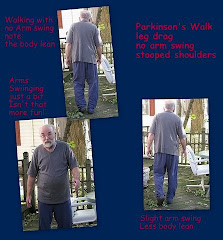
One important aid is exercise. Gait exercise can be crucial. We suggest asking for a referral to a therapy center so that gait training can be initiated. Gait training would include lengthening of stride, learning to open at the hips for a wider stance. The smaller the space between the legs, the less option to maintain balance. Lifting the legs almost in a march rather than shuffling and sticking to the floor may also be of value to provide a mental and physical cadence and to decrease the risk of the tripping on the shuffle.

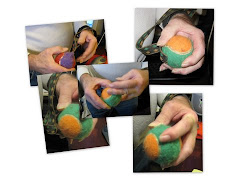
Exercise addresses range of motion, flexibility stretching and yes, even strength training (to assist in rising if you do fall) and breathing. Yoga and Tai Chi exercises can help with balance and even graceful falling. Nautilus is important exercise equipment and there are less expensivel pieces of exercise equipment which can be purchased for home use. Don't neglect hand exercises. Being able to grip is crucial; a weak or claw-like hand won't help you.

Dance therapy might be helpful. Although its effects will not be physically apparent after the music stops, there might be a psychological-confidence effect which impacts postural instability due to PD depression. And it's FUN! Even in your living room. Get those endorphins going.

Locate a therapy center which has Forced Exercise equipment and aqua therapy. Water exercises can be beneficial to a PD patient because of the buoyancy effects of exercising - marching in the water. And Forced Exercise - not on a treadmill in this case unless there are trained spotters or with a support vest which attaches to the ceiling - but on the motorized exercise bicycles which compensate for the patient's inability to maintain the necessary rpms on his own. For some people these bikes are an affordable option for home use - for others, they are not. But the bike must be able to maintain between 80-90 rpm. There are two types of therapeutic bikes for this purpose. One is the Theracycle (there should be an ad link on this page). The other company is Reck MotoMed which makes several styles for home and therapy center usage.

Naturally there are aids such as shower seats (with backs or transfer seats), grab bars in the tub/shower area (no suction cups please), hand-held shower-heads with longer hoses and on-off buttons to prevent unnecessary standing in the shower. Soap on a rope.

No PD home should be without bath/shower aids even if they are not needed immediately. Knowing how to use them and using them regularly helps to train the body so that when the equipment is needed, there is kinetic memory to reinforce the use patterns. (Yes, I am a believer in the possibilities of kinetic memory to resist the tightening muscles and we have seen it work with my husband in entering/exiting the shower after the side effects of dehydration - another story - had some temporary but dire cognitive effects).

Little is available to address postural instability in PD. Usually discussed as a later PD symptom because it is apparent then, to many it is an invisible side effect as a very early symptom. Everyone talks about falls, the risks, prevention and the role they play, but we haven't found many solutions to address the problem by fixing the chemical imbalances which cause it because we are not sure precisely where in the brain the problem originates although the focus is on the brain stem.

There is one rather expensive pneumatic device which can be used in the home to aid in lifting and there appear to be patent applications for more. The link to this inflatable device is provide below at a site with which we are unfamiliar.

Have a home safety evaluation conducted. These are often done by occupational therapists - they'll survey the home, watch the patient functioning in their own environment and make safety recommendations. They need to know the patient has fallen in the past and what the ensuing problems have been.

The process for assisting a patient who has fallen is step by step after you are sure there has been no injury. Do not move an injured person. Make the call for emergency medical assistance. Or use that MedAlert button.
No injuries? Whew! Let's catch our breath. Everybody breathe calmly a few times to relax.
  • Encourage the patient to roll from the landing position to a prone face down position. You may be able to assist with that.
  • Next the patient must raise the upper torso onto bent arms. The lower part of the arm is on the floor.
  • The buttocks are next, assisted by the knees.
  • With weight on the forearms, rock forward and then back as you use those abdominals to lift your butt into the air.
  • The knees will walk forward and assist with the push up.
  • Once the patient is on his/her knees, you can assist them if they need help. If they are unable to rise from a kneeling position, they may be able to pull up on sturdy furniture or walker. Or you may be able to brace them (their arm around your shoulders and both of you rise from a kneeling position. The caregiver must keep a straight back to avoid injury.
  • If you are alone, you may be able to crawl on your knees to furniture solid enough to provide support for the pull to a standing or seated position.
At this point prevention and exercise seem to be the best methods to reduce the risks. Many caregivers are simply not strong enough to pull or lift a person lying on the floor without assistance. This is also another argument for the other forms of exercise accompanied by strength training.

additional reading:
Chronic Dizziness and Postural Instability

Links to inflatable device and detailed advice on its usage:
Same information if you can't view pdf format:

It's being called WiiHab and we already know that it can help with PD depression, what about postural instability? As a diagnostic it has been found to be effective:
Validity and Reliablity of the Nintendo Wii Board for Assessment of Standing Balance

To try the Wii at home: you'll need the Nintendo console, the balance board and some accessories such as the WiiFit program and controllers. The balance board must be on a firm surface to work properly. If balance is a serious problem, make sure you have support or supporters handy.
For more information check Wikipedia before you buy

Monday, April 12, 2010

Is the Plug Being Pulled on Embryonic Stem Cell Line Distribution?

National Stem Cell Bank NIH Contract Not Renewed - WiCell Plans to Move Forward
How Will This Effect Parkinson's Disease Research?

The hope for the use of stem cells to treat and possibly cure many incurable diseases or life-altering conditions is shared by many patients and families around the world.  Research with human embryonic stem cells (hESC) is still relatively new, having been started at the University of Wisconsin-Madison in 1998 in the lab of James Thomson.  Despite the apparent opening of the field upon the Obama orders to the lift the Bush ban against federal research funds being used for hESC, the new NIH guidelines were not met with overwhelming enthusiasm.  Still restrictive, these guidelines did, however, open the door for researchers. Now, a few months later, it would appear that door is subtly and quietly being closed again.

The National Institutes Of Health (NIH) did not renew the National Stem Cells Bank's $16.1 million four year contract with WiCell Research, a private non-profit at the University of Wisconsin-Madison. The contract, which expired on February 28th, 2010, had subsidized the distribution of Federal approved embryonic stem cells. Since the contract was not renewed, the lack of action and adequate funding caused the bank to regroup.  The closing has led to a doubling of the price for approved stem cells. Costs have risen from $500 a vial to $1000 as there is no longer a subsidy for obtaining those 20 lines. 

Both the general public and medical scientists had thought that stem cell research would be moving much faster after President Obama took office and doubled the number human embryonic stem cell (hESC) lines available.  Instead, just getting the lines distributed to the researchers has become an unexpected hurdle. The former National Stem Cell Bank has now become the Wisconsin International Stem Cell Bank (WISC Bank) but the prices have been doubled in order to meet previously subsidized expenses. It is not clear how this will effect future research.  WiCell has, however, expanded its lines from 20 to 33 and is planning to move forward.

Is there an underlying reason to attempt to bar one door in favor of another to open wider for another area of research?  We don't have that answer; the transition seemed low-key.  But there in recent years there has been an expanding a trend toward not the scientific significance but rather the economic impact of research.  Science, politics and finance do not make a great martini; but they do make the research drink in which currently we find ourselves.

In January NIH expanded its contract with a different cell bank. Coriell Institute for Medical Research is a non-profit institution which established the Human Genetic Cell Repository in 1972. Coriell is known to have the largest bank of human cell lines and has long been associated with the NIH. In 2010 the National Institute of Health provided $27 million to Coriell for banking induced pluripotent stem cells(IPS), for which there is no destruction of embryos, to create a stem cell lab and a human genetic biobank.  Nothing is planned at this point for specifically underwriting embryonic stem cell banking. 

The hope is that the NIH will continue to consider setting up its own public stem cell bank if they are not going to renew with WiCell.  This action would reduce the price and speed the delivery of all lines but especially the new lines approved by the Obama administration.
 
Currently there are 109 hESC lines awaiting NIH approval for NIH funded research, 237 lines for which there is an intent to submit. 51 hESC lines (3 on hold) are available in the NIH Registry.  The approved lines are eligible for NIH funding grants but these lines are available only through individual institutions. A total of 54 institutions have submitted lines or intend to do so.  The future costs per vial for researchers is unknown although currently Children's Hospital Boston, affiliated with Harvard Medical School which is still shipping lines at a loss.

While there are many big pharma potentials, it is the preliminary and intermediate work in understanding the medical conditions, recognizing the best targets, developing safe and effective processes and procedures that must take place before there is more than profit potential.  And after that the intellectual property rights will have to be determined and the debates will rage.

Waiting for effective treatments are people with Parkinson's and Alzheimer's disease, diabetes, heart disease, spinal cord injury and many more. For these people with incurable conditions has a hope been dashed or simply redirected to another area of scientific research?  Time, once more, may not be on our side.

References:
Promises, Promises by Stuart Blackman, The Scientist

You can read more about stem cell basics at the National Institutes of Health website. You can also read the 2006 NIH Stem Cell Report of progress made since 2001.

Wednesday, April 7, 2010

Calcium Channel Blockers Crossing the Blood Brain Barrier for Parkinson's Disease

BBBs and the L-type CCBs that cross them

If you've ever looked at the common questions about Parkinson's disease and dopamine as asked in the classroom or in homework help on Yahoo!Answers, you have already seen the most common question goes something like, "Why does dopamine die in PD?"  And that's a biggie, misleading but still a $64 million dollar question.

One interesting thing about Parkinson's disease is that although dopamine is produced in several areas of the body including the brain in the substantia nigra and the ventral tegmental area, the VTA does not appear to be susceptible to over-expression of alpha synuclein. Which means there is yet another research area for the potential of grafting - or stem cell therapy.  Moreover, not that much dopamine is metabolized to norepinephrine which explains why PD may not begin officially until the number of norepinephrine neurons also diminish.

But that's not our question for today. What do we know know about saving dopamine neurons in the substantia nigra?

Mouse PD models have already demonstrated that cell "rejuvenation" protects neurons in studies at Northwestern University.  Most human cells use either potassium or sodium channels when they are young but as the body ages, the dopamine cells switch to calcium channels. By blocking the calcium channel may give the cell a chance to rest and recover which is healthier than cell death and essential for PD.  In 2007 Steve read at least two abstracts by Dr DJ Surmeier etal about this very subject.
In the first abstract it was the statement: "Our studies suggest that the unusual reliance of these neurons on L-type Ca(v)1.3 Ca2+ channels to drive their maintained, rhythmic pacemaking renders them vulnerable to stressors thought to contribute to disease progression." 
And in the second:
"The Ca(2+) channels underlying autonomous activity in dopaminergic neurons are closely related to the L-type channels found in the heart and smooth muscle. Systemic administration of isradipine, a dihydropyridine blocker of L-type channels, forces dopaminergic neurons in rodents to revert to a juvenile, Ca(2+)-independent mechanism to generate autonomous activity. More importantly, reversion confers protection against toxins that produce experimental parkinsonism, pointing to a potential neuroprotective strategy for Parkinson's disease with a drug class that has been used safely in human beings for decades."

In order to stay on target we have to mention the arguments. 
From DJ Surmeier in Neuron: "The controversy about whether dopamine contributes to cell loss in Parkinson's disease takes a new turn as Mosharov et al. in this issue of Neuron demonstrate that Ca2+ influx through L-type channels elevates dopamine synthesis to potentially toxic levels in vulnerable ventral mesencephalon neurons."

In the study entitled "Interplay between Cytosolic Dopamin(e), Calcium, and alpha-synuclein causes selective death of Substantia Nigra Neurons"
"They attribute this specific elevation of cytosolic dopamine in SN neurons to the presence of a pace-making L-type calcium channel as a source of calcium entry, present in SN, but not VTA, neurons. Blockade of this channel, as well as treatment with intracellular calcium chelators protects SN neurons from cytosolic dopamine build-up....the pace-making L-type Ca channel may prove to be a useful therapeutic target in PD"
Faculty of 1000 Biology: evaluations for Mosharov EV et al Neurorn 2009 62 :218-229
 
We've written before about the studies which found that neurons die because calcium channels lead to an increase of dopamine inside the cell; excess dopamine then reacts with alpha-synuclein to form inactive complexes; and then the complexes gum up the cell's ability to dispose of toxic waste accumulating in the cell over time. The waste eventually kills the cell. Put another way, Dopamine in presynaptic terminals prior leaving the vesicle, signal the post synaptic terminal.  "A better treatment may be to push more dopamine into the compartments where it has no toxic effect on the cell" according to Eugene Mosharov, Ph.D., associate research scientist, and David Sulzer, Ph.D., professor of neurology; psychiatry at Columbia University Medical Center.

The question is why? And that is the answer being sought in the Calcium Channel inhibitor research - does the Ca inhibitor restore a more youthful saline condition to the cell in order to prevent cytosolic death?  And if so what is required of that inhibitor?  It has been proposed that the inflow of calcium is the last pathway "for irreversible neuronal injury" because the oxidative stress of free radicals "prevents neurons from maintaining ionic homeostasis."  One result is that neuronal depolarization triggers an action potential which opens the Ca channels. So what we need is a way to prevent the floodgates from opening to cause that neuron damage.

The first thing that this CCB must be able to do is get to the brain in order to work. Crossing the blood brain barrier (BBB) depends upon lipid solubility of small molecular size. To be lipid soluble means that it must be rendered more polar by metabolism prior to excretion in urine. Where can we find those small lipid soluble molecules? 
 
Within the dihydropyridine class of CCBs is a subtype of L-type (L representing long-lasting length of activation - slow CA channels in the cell membranes) voltage-gated calcium channel blockers. These L-type Ca blockers exert an anti-inflammatory effect and we know that some scientists have referred to PD as an inflammatory disease. As it happens, neurons which die in Parkinson's also contain a type of L-type calcium channel. CCBs affect SN neurons in a manner similar to the way they affect the heart. 
  
Now it happens that the channels are not identical.  In the substantia nigra we find a CaV1.3 channel.  The current drugs in the L-type class happen to prefer CaV1.2 channels so we aren't there yet.  As a matter of fact, there is an open door for more R&D in this area.  But if you have PD, you often try what is available. 
 
Research at Northwestern University, at Emory University, at Columbia University may find the precise answer.  Meanwhile at Northwestern Dr Surmeier has explained, "...partial blockade of Cav1.3 channels is sufficient to provide protection against a toxin challenge... We also know from epidemiological studies (Becker et al., 2008 and a study by Ritz et al. in press) that dihydropyridine use for hypertension is associated with a significantly reduced risk of Parkinson’s disease...If it turns out that more complete antagonism of Cav1.3 channels is necessary to achieve protection in humans, then more selective drugs would have to be developed that spare the cardiovascular system."

Of the dihydropyridine class (note that they all end in "dipine"), the L-type inhibitors which cross the blood brain barrier are: Amlodopine, Azenlnipidine, Clevidipine, Felodipine, Isradipine, Nicardipine, Nefedipine and Nimodipine.

additional reading:
Neurons and action potential - scroll down the page
Neurotransmitters and their molecules  
Brain diagrams: the basal ganglia and the cerebellum  sorry to say this link no longer works
A unique interactive brain diagram thanks to Open Colleges
Previous posts and comments:
The PD Triangle for cell death
DynaCirc or Isradipine - generic vs brand
Switching back to DynaCirc Cr      
The Future of Isradipine and PD

April is Parkinson's Awareness Month
Visit PDF for suggestions of group activities

And if you live in Northeast Ohio
There is a Benefit Recital
for Parkinson's Disease
to be given by Clair Allen, violinist
whose Father passed away earlier this year
following a long battle with PD.
Claire is dedicating her Senior Recital to his honor.
Donations will go to the Michael J Fox Foundation
to support Parkinson's research.
Works by Schumann, Bach, Dvorak and Bartok
Sunday, April 11th, 2010 at 2:00pm
To make a donation follow the links at TeamFox.org

Sunday, April 4, 2010

Parkinson's Disease: Calcium Channel Blockers with Treatment Potential

CCBs that cross the Blood Brain Barrier for PD
Most of us read of the California-Denmark study based upon many years of data
from which it was observed that some calcium channel blockers have been found
to decrease the PD risk factor by about 27%.
 
But what about those who already have Parkinson's?
Today we'll skip the toxic dopamine argument between Mosharov and Surmeier etal
and just take an actual look at the CCBs in the Dihydropyridine class.
Specifically we show the L-type CA(2+) CCBs that can cross the blood brain barrier.  
Next we'll post the discussions, the disagreement and study links. 


DIHYDROPYRIDINE
CALCIUM
CHANNEL
BLOCKERS
Also known asNotes
Amlodipine
Norvasc
Perivasc, Istin, Agen, Aken
Amidipin, Dailyvasc, Lopin,
Amcard, Ambolet

Crosses BBB 
3rd generation
Lipophilic Dihydropyridine
May accumulate in brain
AranidipineSapresta-
AzelnipidineCalblock
Crosses BBB
scavenges hydroxyl radicals
but not superxide radicals
Reduced levels of
intercellular ROS
BarnidipineHypoCa-
BenidipineConiel
may act in a similar manner
to nimodopine
CilnidipineAtelec, Cinalong,
Siscard, Cilacar

Crosses BBB
dual blocker of L & N-type
calcium channels
does not target protein
kinase C
ClevidipineCleviprex
Crosses BBB
ultra short acting intravenous
CA2+ CB
EfonidipineLandel
Another T-type
selective CCB
some L-type inhibition
Felodipine
Plendil
Renedil (in Canada)

Crosses BBB
2nd generation    
IsradipineDynaCirc, Prescal
Crosses BBB
8 hour half-life
2nd generation
LacidipineMotens, Lacipil
Exhibits high partition
coefficients into
phosphatidycholine
LercanidipineZandip
Does not readily cross BBB
3rd generation
has a molecular design which
imparts greater solubility
within the arterial cellular
membrane bilayer,
membrane-controlled kinetics
and a high cholesterol
tolerance factor.
Mandipine
Artedil, Calslot,
Manyper, Iperten, Mandipot
Manivasc, Vascoman

3rd generation
less potential for pedal
edema than other CCBs
Nicardipine
Cardene,  Carden SR

Crosses BBB
Similar to Nifedipine
2nd generation
Nifedipine
Adalat, Procardia
Apo-Nifed (Canada)
Novo-nifedin (Canda)
Nu-nifed (Canada

Crosses BBB
Lipophilic Dihydropyridine
NilvadipineNivadilBlocks L-type channels
Nimodipine
Nimotop, NIMO
Nimodipina

Crosses BBB
similar to Nifedipine
Lipophilic Dihydropyridine
Nisoldipine
Baymycard, Sular, Syscor
-
Nitrendipine
Cardif, Baylotensin,
Baypress, Deiten,
Nidrel, Nitrepin
-
PranidipineAcalas
Carries grapefruit juice
warning as do other CCBs

DIHYDROPYRIDINE
CCBs
Known asNotes

Monday, March 29, 2010

Differential Diagnoses and Parkinson's Disease

What do the stereotypes mean for you and PD?

We already know that the precursor symptoms of Parkinson's disease can show their presence years before the disease is full blown and diagnosable.  We always want to be reassuring or to be reassured when we notice them. So we tell each other and ourselves:

"Oh, it's nothing"
"You're just stressed"
"Well who wouldn't have sleeping problems, you're depressed"
"Losing your sense of smell is convenient, now you can avoid changing the cat box"
"Perhaps that neck and shoulder pain is from the way you sit at the computer"
"Get another pair of shoes, you're dragging your leg when you walk"
"Get a new pen, your handwriting has changed"
"That tingling is the beginning of carpal tunnel, get a wrist rest"
"Try these pills to help you sleep or for your depression"
"Who wouldn't be depressed, you're not sleeping enough"

And so a few years pass and the next symptoms appear and you make that dreaded appointment.  Afraid to know but afraid to delay treatment.

When that tremor appears, people know it is time. The good news for many is that that an action or a postural tremor is not PD. Sometimes it is a sign of Essential Tremor, which isn't curable but in many cases more manageable.  And you can drink to that.  But that postural tremor which occurs not when the limb is at rest but rather when performing an action can also be a sign of renal or liver failure, of hyperthyroidism, of Dystonia; it can be caused by medications, hypoglycemia or Fragile X Syndrome(FXTAS). The list is long and the diagnosis needs a professional so that the proper treatment can be initiated.

Then there are the people diagnosed with Parkinson's Disease who actually have Parkinson's Plus: the Multiple System Atrophy group (MSA), Progressive Supra-nuclear Palsy (PSP), Dementia with Lewy Bodies (DLB) and Corticobasal Ganglionic Degeneration (CBGD).  There is even Parkinson's with ALS The correct diagnosis is necessary to avoid delaying the correct treatment to improve quality of life.

Let's face it, for many people it may seem to be less frightening if they can arm themselves with information before their doctor's appointment. Reading about conditions can actually help you prepare a more thorough list of symptoms. Other people only want to know more after the diagnosis. Before getting any on-line prompts and suggestions, it's a good idea to make that list of all  your symptoms and when they occur. That way you won't be as easily swayed by suggestion.
 .
Although there is not always good news, there are helpful online sites for many conditions.  The Parkinson's sites are listed in the right hand column here as Helpful Links.  For Parkinson's Plus one of the most informative sites is actually eMedicine from WebMD.  The National Institute of Neurological Disorders and Stroke (NINDS) provides a brief but helpful overview of tremor. So does Medline Plus.  You can read about Essential Tremor at several sites.  In our opinion the best site for Essential Tremor information is WeMove.org.  Another site with a helpful chart of pathology of the nervous system is Wikipedia.

The point is that if you are prepared for your doctor's appointment by having a symptom journal, you can be not only proactive in providing some of the information needed to make the most accurate diagnosis but you can also become a significant part of your medical team.  And yes, you are going to need you.

We know of patients who have been told to go home to die. While having your financial affairs in the best order possible and by spending quality time with family and friends is excellent advice for everyone, we just heard a patient's take on that give-up advice from a very courageous woman. When told that there was nothing she could do for her MSA, she asked the doctor if he would give his wife, daughter, mother or sister that same advice. He saw her point and treatment became interactive. We think she's doing very well in finding a course of alternative treatment. She said she had no choice, she wanted to live and there was no hope by following the doctor's advice.    

Even if those early warning signs don't send you to the doctor, at least make a mental or written note.  If the symptom persists, pay attention, your body is telling you something that could be important.

Sunday, March 14, 2010

Finding a Safe Online Pharmacy for Parkinson's Disease Medicine - part I

What if you can't find the PD medications you need for your treatment at a local pharmacy?
For those of us who were born in a time when information on almost everything was not readily available in our homes, it is amazing to be alive when vast stores of knowledge are finger taps away even when we are in our cars or hiking in the park.  When our children were growing, we kept a dictionary in almost every room.  A phone interruption at dinner time was not acceptable but stopping to look up the meaning of a word was encouraged.

When I was a child, there was an encyclopedia set to put one on the right track or just to read, page by page for the fun of learning about anything.  What do you want to know about Anacondas?

Now there is a huge overload of information.  We love that. But not all of it is factual.  Some is poorly edited or not accurate; some is sound- byte brief and some is just designed to separate us from our money. 

Because UCB has not been able to provide positive news about the Neupro patch availablability in the USA as they wait on the FDA, I thought I would continue the search of online pharmacies to see what I could find out there.  I found several online pharmacies which list the patch. I noticed was that the patch is very expensive. Because we had no knowledge of the prior US cost of the patch I decided to compare other medications for which I knew the price. They were expensive...not that expensive but at least 25% higher in price.  Of course there is also the question of the cold storage delivery.  And that is a BIG question.

We began to receive questions about the availability of other medications.   These questions were from markets with which we were not familiar. I just did a check on an L-type CCB, DynaCirc CR, availability and communicated with GlaxoSmithKline (GSK) as part of that search.  Turns out that despite the fact that they make the product and have offices in Australia, you can't find DynaCirc in there. You can, however, buy it from an online pharmacy in New Zealand, not to mention Israel, Canada and a few other places where I could not verify the online pharmacy.

I also found an online site which will check for some comparative prices and provide information about the pharmacies.  Therefore I did a domain search online because it is important to know the company trail - how long have they been operating their site - are they here today but gone when you are entitled to a refund or didn't receive the product they didn't really mail to you after charging your card. 

Since this company has been in business since 2002 with a 2008 update, we're passing that backlink along to you with a warning.  Although there are several ways to check for information things at the Pharmacy Checker website be advised, they do not list every bona fide online pharmacy, only their clients, and it is possible that they have some questionable clients on-board or at least did at one time.
This problem means that before you use any online company check the domain and also look for scam warnings. Due Diligence on your part.

Not all scam warnings are valid.  Some are just from customers who didn't read the shipping charges or the estimated wait time for arrival. Other complaints are very serious.  These complaints includethe company shipping the wrong item and labeling it incorrectly; taking  money for the brand and getting a generic which while similar might not be the same. And even worse, counterfeit pills.  Other scams include charging your card while not actually shipping the itemor submitting charges without authorization.

Companies can charge for shipping on a regular basis when you did not authorize such a program. Another danger is that you might receive out of date medication.

If your credit card is charged for any fradulent reason, report it to your card company immediately as this will enable to limit your obligation and in some cases your card company can bill back to recover your funds. If you reach this point, you can help others by reporting the scam and company to lots of online scam reporting sites and to any governing authority.

You need a prescription for prescription medication 
No prescription required is a red flag!

Another cautionary when ordering from a Canadian pharmacy is to look for the seals of accreditation. Some are real and some are fake. Note the seal and check with the issuer.  You can use either of the following links at the Canadian International Pharmacy Association (CIPA) to verify accreditation of the pharmacy you are considering. If you want to verify membership: contact CIPA.  They have a similar link under consumer safety. They will also list known sites which display a fake CIPA seal. There are other seals as well. Individual provinces will also require accreditation. As a matter of fact there is also a seal for the

Things to watch for: 

  • Phone and fax numbers. Give them a call on their 800 number ostensibly to verify their mailing address or shipping & handling fees, whatever. But try calling at an off business hour.  Did you get a voice mail?  Anything?  Nothing tells you to move on. Don't leave a phone number or an email address.
  • Does the site list an address - although this could be a mailbox company which would provide both street number and suite number they should be a legitimate pharmacy with a regular address.  I'm not so sure about companies which have drop shipping.
  • Is their domain check questionable datewise?
  • The AARP reported Double Drug Sting - just noticed this one - interesting 
  • Do you have online access to the company pharmacist? 
  • Do they ask for the prescription - if they don't - let your fingers walk away
  • Is the price too low to be believed - don't believe and don't buy!
  • Have you done your due diligence?  Are you dealing with a legitimate company? 
We wish that Parkinson's medications were available to all patients everwhere at affordable prices for everyone.  But the sad fact is then this isn't the case.  So we click our fingers on the keyboard and our options are displayed on the screen before us.   

Thursday, March 11, 2010

Attention for Young Onset Parkinson's Disease


There isn't nearly enough discussion of early or young onset PD

Young Onset Parkinson Conference

National Parkinsons Foundation-NPF and the American Parkinson Disease Association, Inc are co-sponsoring the 2nd
Joint Young Onset Parkinson Disease Conference in Sacremento, California. We are all fortunate to be able to join part of the conference from the comfort of our homes on Saturday, March 13, 2010 - 9:00am to 1:15pm Pacific Time and noon to 4:15pm Eastern Standard Time.

All you need to do is to register at the APDA website and tune in at your equivalent time zone start time. Or you can select the sessions you wish to see and join then. So click on the link to go to the American Parkinson Disease Association (APDA) to register for the webcast
Below is the Saturday, March 13th Webcast Agenda
The webcast agenda begins at 9:00 am pacific standard time for us we:ll join at Noon EST

9:00-10:15 am
The Electric Brain: Tailoring DBS Therapy for Parkinson’s Disease Patients
Michael S. Okun, MD
10:45 - 12:00
Complementary Therapies: Expanding your Symptom Management Options
Melanie M Brandabur, MD, MDS
1:30 - 2:45 pm
Update on Gene Therapies for Parkinson’s Disease
Michael J. Aminoff, MD, DSc, FRCP
3:00 pm - 4:15 pm
Parkinson's Disease Treatment: Is Exercise Really Medicine?
Jay Alberts, PhD
We've watched several short videos by Dr Alberts and we're really excited about the chance to hear a longer discussion. It is possible that in addition to the benefits of exercise and specifically of Forced Exercise which has been shown to reduce symptom severity and reduce reliance on medication for up to 4 weeks after cessation, there may be a benefit for neurogenic orthostatic hypotension. We're only speculating on the last but we're hoping to hear that on Saturday.
~~~~~~~~~~~~~~~~~
From Parkinson's Action Network (PAN)

NETPR - Neurotoxin Exposure Treatment Parkinson's Research program received $2.5 million for fiscal year 2010 in the Department of Defense Apropriation bill. This funding is an add- on each year which means that every year an effort must be extended to have it included.
The 2/17/10 16 Annual Research and Public Policy Forum has been archived but is difficult to locate at the PAN website. It is worth watching in segments, however. And as soon as we figure out how to open it, we'll let you know. If you find it first, please let us know.
Friday, March 26th 2010 is the deadline to ask your Senator to support NETPR.
Last week after the PAN webcast we wrote about the need for everyone to do their part to develop a Registry database for PD and MS that can drawn from current sources. Everyone benefits.. From the Parkinson's Action Network comes the update on the support for the National MS and Parkinson's Disease Registry.
The Importance of Advocacy
If you need a better understanding of what it is the PAN really does and why it is so important, watch the PAN Advocacy video
~~~~~~~~~~~~~~~~~~~~~
Because there are few groups for a sister disease, MSA, and less research, we thought that we should mention this news From Facebook:
Although unofficial, Miracles for MSA (Multiple System Atrophy) has asked that we observe March as MSA month. Since some people have probably been misdiagnosed with Parkinson's disease with a rapid progression when in fact they may very well have MSA, it is only fitting that we should respect and honor that wish.
~~~~~~~~~~~~~~~~~~~~
I'm sorry to say that there is still no news on the Neupro Rotigotine Transdermal Patch horizon. We'll post as soon as there is some positive news about its return to the US. There are Canadian sites where it can be ordered. We've done a bit of shopping online and the prices are high. We're working on that article and will try to get it posted in a few days.
~~~~~~~~~~~~~~~~~~~
For those who are experiencing Neurogenic Orthostatic Hypostension as a symptom of PD or medications or MSA as a result of deficient release of norepinephrine, Droxidopa from Chelsea Therapeutics while available in Japan is still in Phase III clinical trials. We have learned that for MSA patients it can be made available on an emergency hardship basis through your physician.
We'll be writing more as it is closer to being approved by the FDA.

We're enjoying the pseudo March Spring before the next onslaught of midwest snow.

The dogs waited patiently for hours below a tree for the squirrels to come down to play. No fools, the squirrels did not descend to that level.

Friday, February 5, 2010

Parkinson's Disease Events for Winter-Spring 2010

You can take part in these PD events in a variety of ways: by donation, in person, at home, on-line and by phone.
We talk, we read, we share - here are some events where we can join together.


PAN Forum on February 17, 2010
On February 17 from 11 a.m. to 5 p.m. EST
Parkinson's Action Network (PAN) will host a live, online broadcast featuring presenters
who will discuss the latest in Parkinson's disease research and policy
Additional information will be made available after registration

April is for Parkinson's Awareness while the tulips bloom
Parkinson's Awareness Month - April 2010 - US and Canada
and 
Parkinson Society Canada
Parkinson's Awareness Week UK April 20-26th 2010
Parkinson's Disease Society
World Parkinson's Day April 11th 2010
EPDA 

PD Expert Briefings
Tuesday February 23, 2010 1:00pm EST
length: 1 hour
Nutrition and Parkinson's Disease
led by Christine C. Tangney, Ph.D., F.A.C.N., C.N.S
Associate Professor, Clinical Nutrition
College of Health Sciences, Rush University Medical Center

Coming events sponsored by the Parkinson's Disease Foundation:
What's in the Parkinson's Pipeline?
Tuesday April 20th 1:00 pm ET
David G Standaert, PH, PhD
John and Juanelle Strain, Professor and Vice Chair of Neurology
University of Alabama
Sleep Disorders and Parkinson's Disease
Tuesday, June 1 1:00pm ET
Joseph Friedman, MD, Clinical Professor of Neurology
Brown University

From the National Parkinson Foundation
Young Onset Parkinsons Conference  March 12-13, 2010 in Sacremento, CA 

Parkinson's Disease Walks scheduled for 2010 
The Parkinson's Unity Walk
Sunday April 24th 2010
New York, NY
The American Parkinson Disease Association, Inc

Thursday, January 28, 2010

Parkinson's, a Disease of Shortages

Help to find Sinemet, Plus and Sinemet CR for PD during the current shortage
Everywhere we look we can read that PD is a chronic progressive neurodegenerative disease which manifests because of a shortage of dopamine neurons in the brain thus causing no shortage of motor and non-motor symptoms.  So shortage is no stranger to the Parkinson's disease patient and we've talked about many of those for months.

We haven't talked from personal experience about levodopa-carbidopa (Sinemet) as a symptom relief treatment for Parkinson's disease.  About 8 weeks ago Steve began taking levodopa-carbidopa.  He is actually on a fairly low dose which seems to help a great deal with stiffness, a bit with tremor and not so much with weakness but he still hasn't titrated up to the full prescribed dosage - we're on hold for a totally different reason because we don't want to.
 
What we have seen is that you can set the clock by the wearing off because he immediately asks if he is due for any medication even waking from a sound sleep. But there are no side effects other than feeling somewhat drowsy.

It was his idea to take levodopa-carbidopa and his neurologist agreed to write the prescription. He has not reached the point where he needs a higher dose to be effective and so he has no reason to take the controlled release (CR) form for a steady, continuous delivery.  And because the first morning dose of the timed-release pills may actually take much longer to start working, we hope that we will be able to control the stiffness with the generic version.
  
Many people who require the steady release over 4 to 6 hours and many of these people will be affected by the shortages of:
  • Sinemet tablet 12.5/100 mg
  • Sinemet CR tablet 50/200 mg
  • Sinemet Plus tablet 25/100 mg
These product shortages were announced by Bristol-Myers Squibb Pharmaceuticals Ltd in August 2009 and by Merck Sharp & Dohme Limited (MSD) in October 2009. The shortages are expected to last from 2010 through 2011.  If you're not sure it your pill is on the list, you can check the European Parkinson's Disease Association chart.

The product distributor, Bristol-Myers Squibb indicated in an August announcement that there were packaging issues which would cause a three week delay. 

Also announcing a shortage was Apotex, Inc for the generic Apo-Levocarb CR (200/50) available in Canada but now discontinued. Patients are encouraged to consult their doctors for treatment alternatives. Bristol-Myer Squibb is the distributor for Merck, supplying to Apotex. When announcing in Canada, no reason was provided, however other reports suggest that consumer stock-piling was already in progress creating a short supply.

The good news is that many generic versions, usually slightly weaker, still appear to be readily available, so it is not time to panic if you are using the medication for Parkinson's disease, parkinsonism, encephalitis caused parkinsonian symptoms, carbon monoxide or manganese poisoning.  Just how long this will last is unknown.
Merck has explained that the issue is not one of safety but rather a change in the supply source and the time frame required for proper jurisdictional approvals.  Because of contractual obligations, some markets may fair better than others.  Because of the length of time for regulatory approval, the wait time is uncertain.


People who are already taking Sinemet CR, Sinemet Plus of Sinemet 12.5/100 and are concerned about not being able to renew a prescription can call one of several numbers worldwide to speak to the customer relations department at Bristol-Myers Squibb Pharmaceuticals Ltd (800) 332-2056 or at Merck Sharp &amp Dohme Ltd or the parent company Merck & Co, Inc. 

The following countries have offices which you can contact at the Merck links above:
Argentina, Australia, Austria, Bahrain, Brazil, Canada, Chile, China, Columbia, Costa Rica, Croatia, Denmark, Ecuador, Egypt, Estonia, Finland, France, Germany, Greece, Guatemala, Hong Kong, Hungary, Iceland (see: Denmark), India, Indonesia, Ireland, Israel, Italy, Japan Korea, Kuwait, Latvia, Lebanon, Lithuania, Malaysia, Mexico, Netherlands, New Zealand, Norway, Oman, Pakistan, Philippines, Poland, Portugal, Qatar, Romania, Russia, Saudi Arabia, Singapore, Slovakia, Slovenia, South Africa, Spain, Sweden, Switzerland, Taiwan, Thailand, Turkey, UK, United States, Venezuela, Vietnam.
If you live in the UK, you can make sure that your physician has the following number:+44(0)1992 467272.

Thus far we have not seen warning for the other L-dopa/carbidopa combination medications.
Just a few reminders in case you are having an issue locating a supply:
  • You can not split a timed release tablet    
  • You could have a withdrawal problem if you simply stop taking the medication; consult your physician about a lower dosage prescription in order to titrate down.
And if this isn't bad enough, there is also going to be a shortage of Eggos until mid-2010 due to flooding at the Atlanta bakery in October, 2009.
~ ~ ~ ~ ~ ~ ~ ~ ~ ~ ~
Addendum
Per information from the American Society of Health-System Pharmacists"

Back on February 23, 2010, GlaxoSmithKline (GSK) had acquired Reliant and announced that DynaCirc CR had been unavailable during the transition period. The 5mg and 10mg pills are available now.

Activis Group did make some changes in isradipine packaging. The 2.5 mg 100 count package is no loonger but the 60 count is available to pharmacies. The same is true of the 100 count 5mg package. Now only 60 count packages are available.

Watson Pharmaceuticals, which was formerly Cobalt, has isradipine available in 2.5 mg and 5 mg 100 capsule counts.

For those who have been taking the CCB Nimodipine, that shortage has been resolved.

Monday, January 25, 2010

Titration and Parkinson's Disease Medications

Withdrawal happens - it is not punishment for taking bad drugs
Loosely related ramblings
There are several types of medication which require a low, steady buildup to the necessary effective dosage. You doctor advises you, the pamphlet you get from the pharmacy will tell you and so will the online sites for that drug. Sometimes in our hurry to switch from one medication to another, it is easy to forget that if you go up slowly, you need to titrate down in a similar manner in order for your body to adjust. And that even if you don't, your body has built up if not a dependence, at least a familiarity with the medication that requires recognition.

While titration downward may cause some symptomatic issues, in the long run your body will thank you. There can be some serious conditions resulting from an abrupt withdrawal. Titrating down from any medication you are discontinuing may be a general rule of thumb until more research is conducted. But there is sufficient research on many meds.

A few weeks one of Steve's doctor prescribed a medication with which I was not familiar. Actually I didn't understand the name he said on the phone and figured I'd just look it up once I had the bottle in hand. (Let that be a lesson to me about being intimidated by an impatient doctor.)

Once home from the pharmacy I began the online search and discovered that this medication could not be taken within 14 days of having an MAOI in the system. So this was not the medication for Steve because he was not giving up the Azilect (an MAO-B inhibitor) which he has been taking since soon after it hit the US market. Although this is a new doctor for Steve, I had provided him with a written list of all meds and regular supplements as well as all symptoms and current issues but he just missed this call. It is important to do your own homework.

A longer time ago than I care to realize, we switched our son from a pediatric to an adult medicine doctor because the peds doc and I weren't in sync. We disagreed too often for either of us to be comfortable. And the worst thing is that I was right far too often. I cite the last incident as an example.

It turned out that a sad prior experience shared with me by our beloved Veterinarian over a distemper puppy from the pound. What we learned about pediatric medicine taught us both about how rapidly respiratory issues can turn on you.

In this case I felt that a sudden temperature shift had turned on my son and I wanted his meds switched immediately. The peds doc disagreed. So off we went to Xray. Brought the pictures back to the nurse and we waited and waited in the room designated for such things while the doc read the Xrays and wrote a new prescription because that was what the Xrays told him was needed. Being right didn't help because the peds doc acknowledged it in a surprising way. He left an anxious mother cooling her heals while a very sick child lay on the bench struggling to breathe and with a rising temp for a very long time. Ostensibly the doc was studying and considering while we waited for him to tell us what he had seen and what could be done.

Instead of meeting with us personally, he actually left the building for lunch. He'd told me off earlier so rather than face me, he made tracks. Finally I ventured through that closed door through which one is not supposed to travel unless invited, found the nurse and was handed the new prescription with no other explanation. And our son, of course, got better.

There are a few points to that story. Be proactive - Don't sit and wait. You or your family member are your only patient, the doctor has plenty. Only you can get things moving. Don't just sit there.

But the story doesn't stopped there. I moved our son to adult medicine and shortly thereafter took him in as a followup. He came out with a prescription for prednisone.

Anyway here was this young boy who had been prescribed a heavy-duty medication and a few weeks later I realized that the bottle was still fairly full - too full. I asked him about it when he returned from school. He said the doctor had told him that he had to ease his way up - take the medication - and ease his way down. So he had titrated up, didn't like the way the steroid made him feel and promptly titrated his way back down.

Just so you know, why didn't I know about what the doc had told him...because at the first appointment this favorite human doctor had gently closed the door in my face saying, "Mom, this isn't Peds - this is adult medicine and you aren't invited." Although I never regretted that move as it served our son well, it did teach me many years later, that when its PD, I want to be in the room. (And to make sure that Steve has signed the necessary release for me to discuss issues with his doctors.)

So that was how I learned about titration. From our pre-teen son.

Ken in England, who sends us links of interest, recently sent us one about DAWS.  Dopamine Agonist Withdrawal Syndrome.

Steve reports that when he discontinued the Mirapex, he told his doctor that he was going to titrate down and his doctor told him how to do it. He reports that you should be able to tell if you are titrating down too rapidly; that if you are cutting back to fast your body should respond. Steve was discontinuing Mirapex (a dopamine agonist) and Selegiline (an MAO-B inhibitor) because he had problems with impulse control disorders (ICDs) and hallucinations as serious side effects of the medications. In Steve's case he was not taking levodopa because that was not his first drug of choice and the Mirapex and Selegiline were working well in controlling symptoms.

Reducing dosage of Parkinson's drugs can cause symptoms similar to those of cocaine withdrawal was a study by Dr Melissa Nirenberg and Christina Rabinak at New York-Presbyterian Hospital- Weill Cornell Medical center NY, NY.  What is interesting about this study is that it not only focused only on the ICDs, such as shopping, gambling, eating, hyper-sexuality or sexual behaviors, but also focused on levodopa with the implication that there could be an addictive relationship because of the reward implication of the mesocorticolimbic pathways.

The withdrawal symptoms can be diarrhea, dizziness, anxiety, irritability, agitation, chills. Withdrawal symptoms usually abate but they can be confused with other medical or psychiatric causes.

Dopamine Agonists are not the only meds to watch if discontinuing. SSRIs, Selective Serotonin Re-uptake Inhibitors used as antidepressants to treat depression can do exactly the same thing. And, because they can induce more profound detrimental side effects in a Parkinson's patient, are often discontinued. Caution must be taken when titrating down. You should read more about Discontinuation Syndrome is you plan to discontinue your SSRI.

PwPs may have other medical conditions being treated concurrently. It is important to be aware of all interactions so that adverse affects can be monitored and discontinuation done properly.

There is actually a serious life-threatening condition known as Neuroleptic Malignant Syndrome which can result at both the onset of adding a new drug or the abrupt cessation of certain prescription medications. Making proper titration up and down all the more important.

Withdrawal symptoms are not punishment for people who do illegal drugs, they can happen to anyone.

Additional reading:
A good explanation for the study can be found in another study. Dopamine agonists influence learning and striatal reward prediction errors in PD patients with compulsive disorders